Last Updated: October 30, 2026
Quick Summary
Replace your hvac system when repairs become frequent or costly, when the unit is approaching the 10 to 15 year range, or when energy bills keep climbing. Any gas smell, CO alarm, yellow flame, or burning smell is an emergency that requires leaving the home and calling for help first.
- A gas smell or CO alarm means leave the home and call 911 or your gas utility.
- A yellow or flickering furnace flame should be shut off and serviced before running again.
- Most central air units and furnaces last roughly 10 to 15 years with proper maintenance.
- If one repair costs a large share of a new system's price, replacement often makes more sense.
- Rising energy bills adjusted for weather can signal that efficiency has dropped.
Table of Contents
- Emergency Hazards That Need Immediate Attention
- Signs Your HVAC System Is Reaching the End of Its Life
- Frequent Breakdowns and Rising Repair Bills
- Comfort Problems That Point to Replacement
- Repair or Replace: A Practical Decision Framework
- What Happens During a Replacement Assessment
- Scheduling Your Inspection With M Property Services
- Frequently Asked Questions
Emergency Hazards That Need Immediate Attention
Some HVAC problems are not a matter of timing. They are a matter of safety. The keyword here is immediate , and that word means different things depending on the symptom. A musty smell and a gas leak both belong on a replacement shortlist, but only one of them means you should be standing outside your home right now.
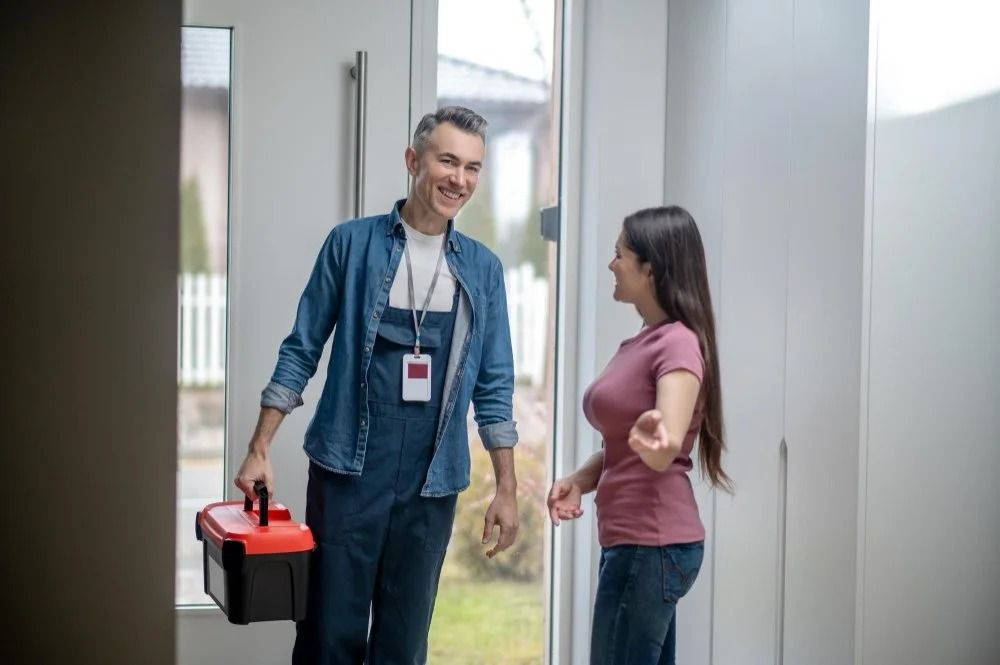
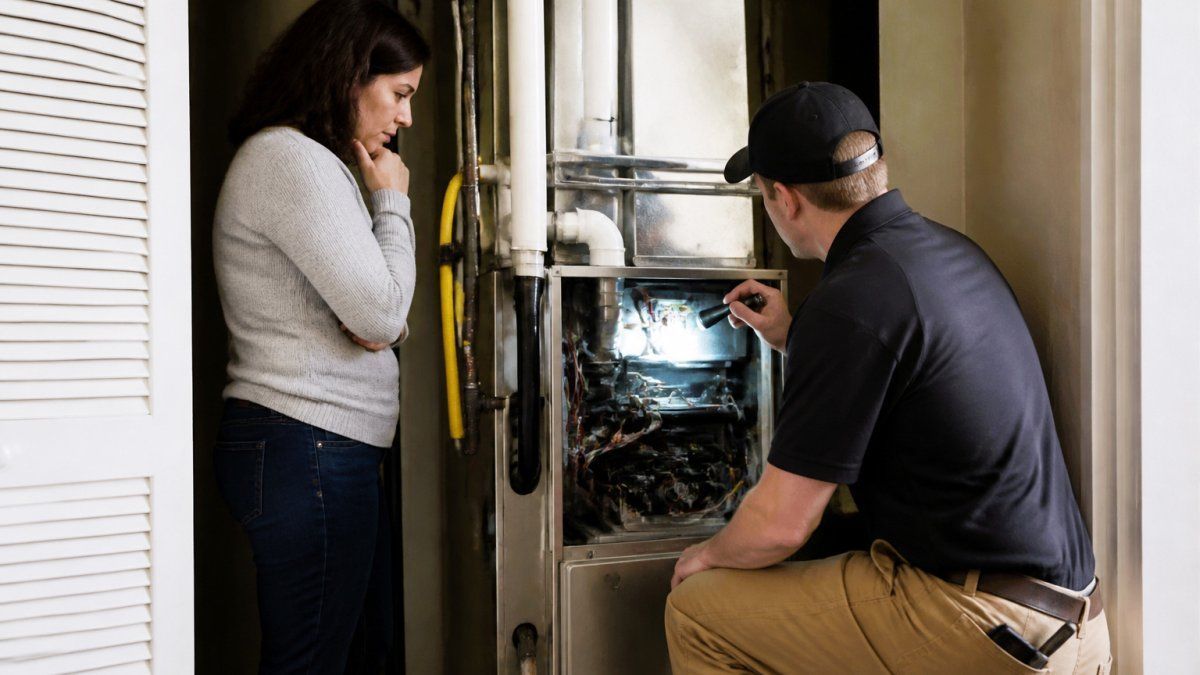
A homeowner standing beside a residential furnace in a utility closet, looking concerned while a licensed technician in work attire inspects the unit with a flashlight.
Tier 1: Shut It Down and Get Out
These are the signs that mean stop using the system and, in some cases, leave the building. Do not troubleshoot, do not restart, and do not wait for a scheduled appointment.
- Gas smell, or a hissing sound near a gas appliance. Natural gas and propane are odorized so you can detect a leak. Do not flip light switches, do not use a phone, and do not start a vehicle in an attached garage. Leave the home, then call 911 or your gas utility from outside. Only re-enter when the utility clears the building.
- A carbon monoxide alarm sounding. CO is odorless and colorless, so the alarm is your only reliable warning. Get everyone, including pets, outside and call 911. Do not re-enter until emergency responders say it is safe.
- A yellow, flickering, or lifting furnace flame. A healthy gas burner produces a steady blue flame. Kuna furnace not igniting: what to check first covers local troubleshooting steps. A yellow or lifting flame often signals incomplete combustion, which can produce CO. Shut the furnace off at the thermostat and call for service before running it again. Book furnace repair service with a licensed technician right away.
Tier 2: Stop Using It and Schedule Service Promptly
These signs are not usually life-threatening, but they mean the system should not keep running while you wait for a routine appointment.
- A sharp chemical or refrigerant odor. Refrigerant leaks should be handled by a licensed professional, so avoid attempting repairs yourself. Turn the system off and call a licensed technician.
- Ice forming on the outdoor unit or refrigerant lines. This usually indicates low refrigerant, restricted airflow, or a failing component. Running the system in this state can damage the compressor, so shut it off and schedule service.
- Repeated breaker trips when the system starts. This can indicate an electrical fault. Leave the breaker off and have an electrician or HVAC technician diagnose it.
Tier 3: Warning Signs That Justify a Replacement Assessment
These are the symptoms that belong on a replacement shortlist rather than an emergency call. They are covered in the sections that follow: unusual noises, uneven temperatures, rising energy bills, and frequent breakdowns. None of them require you to leave the home, but together they are the strongest argument for a planned replacement rather than another repair.
Signs Your HVAC System Is Reaching the End of Its Life
An aging hvac system often sends warning signs before it fails outright. Age alone does not mean replacement is urgent, but a system approaching the end of its expected life deserves a closer look.
Watch for uneven temperatures between rooms, weak airflow, and unusual noises such as banging, rattling, or clanking. Musty odors and ice forming on the outdoor unit can also signal a system that is no longer performing well.
Frequent Breakdowns and Rising Repair Bills
A system that needs repair every season is costing you more than the repair invoices. Track your service history.
Rising energy bills are another clue. As components wear, efficiency drops, and the system works harder to hold the same temperature. Compare your bills year over year, adjusting for weather, to see whether consumption is climbing without a change in habits.
Comfort Problems That Point to Replacement
Comfort problems deserve attention even when they are not dangerous. Persistent humidity, rooms that never reach the set temperature, and poor indoor air quality can all signal a system that is undersized, worn out, or poorly matched to your home. Some of these issues can be corrected with duct sealing or a tune-up, so an inspection is the best way to tell whether the cause is repairable.
Repair or Replace: A Practical Decision Framework
Recognizing symptoms is the easy part. Deciding whether to repair or replace is where most homeowners get stuck, and it is where a transparent framework helps more than another symptom list. Use the steps below in order. This repair or replace furnace decision guide walks through the same choice step by step.
Step 1: Rule Out a Safety Emergency First
If the symptom is in the Tier 1 or Tier 2 list above, gas smell, CO alarm, yellow flame, burning smell, sparks, or a refrigerant odor, stop here and follow the emergency guidance. Safety overrides every other factor, whatever the age of the system.
Step 2: Apply the Age Rule of Thumb
Most central air conditioners and furnaces are designed to run for roughly 10 to 15 years with proper maintenance, though actual lifespan depends on climate, usage, and upkeep. Even without exact numbers, the logic holds, a 14-year-old unit with a repair history is a different decision than a 6-year-old unit with one failed part.
Step 3: Weigh Repair Cost Against Replacement
As a general guide, if a single repair costs a large share of the price of a new system, replacement often makes more sense. A compressor or heat exchanger replacement on an aging unit can cross that line, while a capacitor, igniter, or blower motor on a newer unit usually does not.
Step 4: Check the Repair History
Track your service records. If you are calling a technician repeatedly for the same component, or for different components in the same year, reliability is declining. Multiple repairs in a short window are a stronger signal than any single breakdown.
Step 5: Compare Operating Costs, Not Just Upfront Price
Rising energy bills are a clue that efficiency has dropped. As components wear, the system works harder to hold the same temperature. Compare your bills year over year, adjusting for weather, to see whether consumption is climbing without a change in habits. Newer equipment typically uses less energy, so ask any installer to explain the expected operating cost difference alongside the upfront price.
Step 6: Consider Financing and Timing
Replacement is a larger upfront expense than a repair, and financing spreads that cost over time. A planned replacement also lets you choose the season and the equipment rather than replacing in an emergency, when options are limited. Ask any installer for a written breakdown of equipment, installation, and any required ductwork or electrical work, plus warranty terms.
The article walks through six steps in order, and each one gives a clear test homeowners can apply.
| Step | What to check | Decision signal |
|---|---|---|
| 1. Rule out a safety emergency | Gas smell, CO alarm, yellow flame, burning smell, sparks, refrigerant odor | Safety overrides all other factors |
| 2. Apply the age rule | System age against 10 to 15 year expected life | Older units with repair history favor replacement |
| 3. Weigh repair cost | Single repair cost against price of a new system | Large share of new-system price favors replacement |
| 4. Check repair history | Repeated calls for same or different components | Multiple repairs in a short window signal declining reliability |
| 5. Compare operating costs | Energy bills year over year, adjusted for weather | Climbing consumption without habit change signals lost efficiency |
| 6. Consider financing and timing | Written breakdown of equipment, installation, warranty | Planned replacement beats an emergency purchase |
What Happens During a Replacement Assessment
A replacement assessment starts with a technician measuring the home and inspecting the existing system, ductwork, and electrical connections. The technician should check system age, the condition of the coils and components, airflow, and the size of the equipment relative to your home.
Ask for a clear breakdown of equipment, installation, and any required ductwork or electrical work. If a repair falls outside HVAC, such as a Handyman task like patching a wall or securing a vent cover after the new system is installed, ask whether that work can be handled in the same visit.
Scheduling Your Inspection With M Property Services
If you are unsure whether your system needs emergency repair, a planned replacement, or continued maintenance, a licensed inspection will answer the question. M Property Services provides HVAC services across Ada and Canyon Counties, and our team holds an HVAC Journeyman Certification, along with electrical and backflow credentials that cover the other trades in your home. Before booking, you can review a guide to furnace maintenance for homeowners to see which routine care can delay replacement.
Frequently Asked Questions
What are the signs that an HVAC system needs immediate replacement?
An HVAC system needs immediate replacement when a technician finds a cracked heat exchanger, a repeated gas or refrigerant leak, or electrical damage that cannot be safely repaired. Other urgent signs include a furnace that produces a yellow or flickering flame, a persistent burning smell, or a unit that repeatedly trips breakers. If any of these appear, shut the system off and call a licensed professional. Planned replacement is a separate decision based on age, repair frequency, and comfort performance.
How do I know if my HVAC system is unsafe to keep running?
Treat any gas odor, hissing near gas lines, or soot around the furnace as a safety hazard. Yellow or flickering burner flames, unusual scorch marks, and carbon monoxide alarm activity also indicate danger. Electrical sparks, a strong burning smell, or a chemical odor near the unit should prompt you to turn the system off. A licensed technician can inspect the heat exchanger and electrical components to determine whether repair is safe or replacement is required.
Should I repair or replace an HVAC system that keeps breaking down?
Frequent breakdowns are a strong signal to consider replacement, especially if repairs happen every season or the system is more than about 10 years old. Compare the cost of recent repairs with the cost of a new system and factor in rising energy bills. If one repair would cost a large share of a replacement, replacement often makes more financial sense. A technician can walk you through the numbers for your specific equipment and home.
How old should an HVAC system be before it is replaced?
Many HVAC systems last roughly 10 to 15 years, depending on the equipment type, maintenance history, and local conditions. Age alone does not mean immediate replacement, but a system at the end of its typical lifespan that also has rising repair needs, poor efficiency, or uneven temperatures is a good candidate for replacement planning. Regular maintenance can extend useful life, so an inspection will give you a clearer picture than age alone.