That diagnostic approach matters because heat pumps are more than outdoor air conditioners running backward. A part can be working well enough to avoid a complete shutdown while still causing high energy use and uneven comfort.
Kuna Furnace Not Igniting? What to Check First
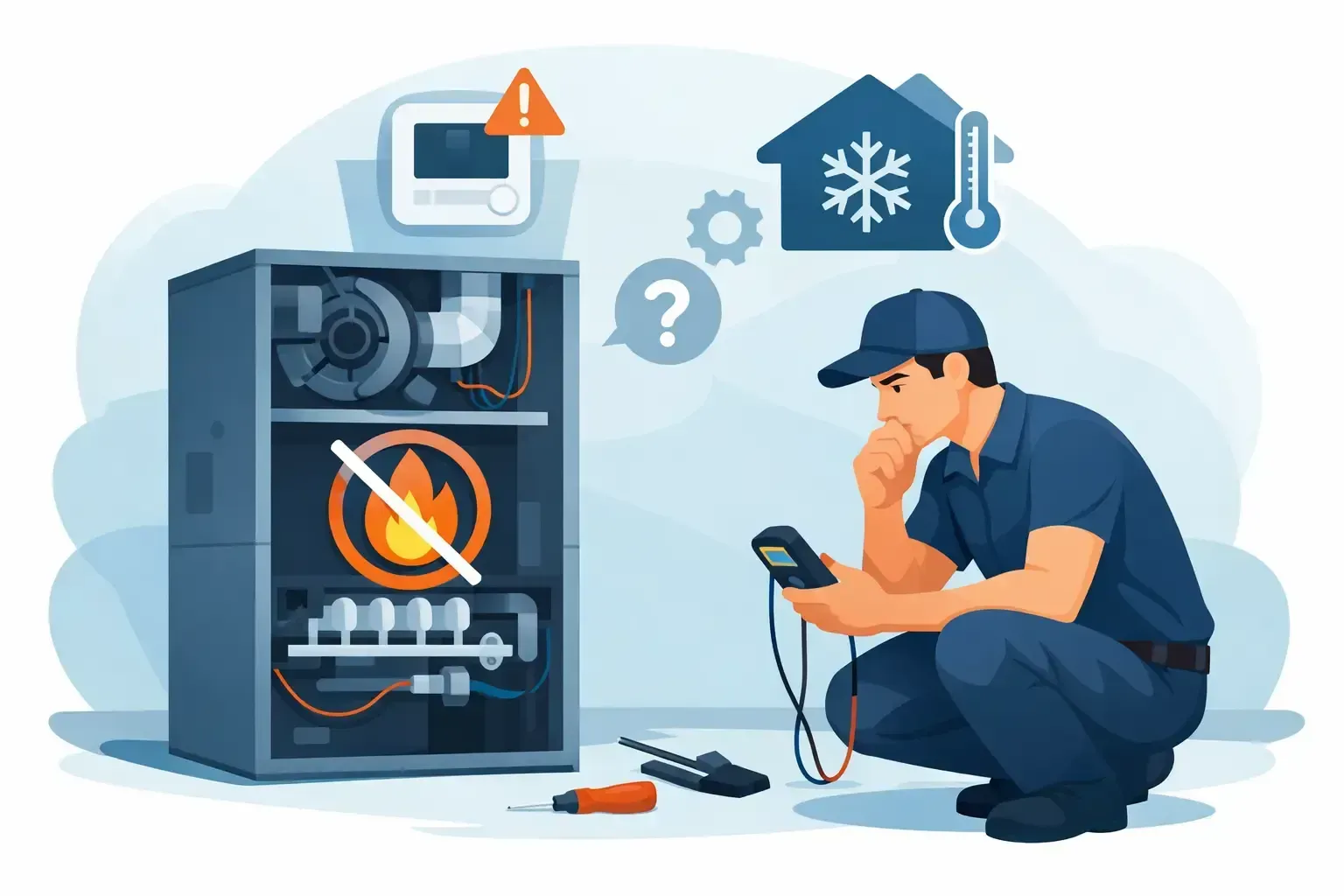
A furnace problem rarely arrives at a convenient time. When the thermostat is set correctly but the house is getting colder, a Kuna furnace not igniting may be the reason. The issue can be as simple as a thermostat setting or dirty filter, but modern furnaces also rely on several safety controls that can stop the ignition cycle when something is wrong. Knowing what you can safely check helps you respond quickly without risking damage, a gas leak, or an unnecessary repair.
Start With Safety, Not Troubleshooting
A furnace that will not ignite is not always an emergency, but a few warning signs require immediate action. If you smell natural gas, hear hissing near the furnace or gas line, or a carbon monoxide alarm sounds, leave the home right away. Do not operate light switches, use a phone inside the house, light a flame, or attempt to restart the furnace. Once you are safely outside, call 911, your gas utility, or an emergency HVAC professional.
Burning odors, smoke, repeated breaker trips, or visible water around the furnace also deserve a professional response. Turn the system off at the thermostat if it is safe to do so. A furnace is designed to shut itself down when it detects unsafe operating conditions. Repeatedly resetting it can hide the real problem and may make a repair more involved.
Safe Checks Before You Call for Furnace Repair
When there is no gas smell, smoke, or carbon monoxide concern, start with the simple items. Many no-heat calls come down to a setting, power interruption, or airflow restriction.
First, confirm the thermostat is set to Heat and the temperature setting is several degrees above the current room temperature. If the thermostat screen is blank or dim, replace the batteries if your model uses them. A thermostat can appear normal while a scheduling program, low battery, or accidental setting change prevents a call for heat.
Next, check the electrical panel. Furnaces need electricity for the thermostat, control board, blower, inducer motor, and igniter, even when they use natural gas for heat. Look for a tripped breaker labeled furnace, HVAC, or air handler. You can reset it once by moving it fully to Off and then back to On. If it trips again, leave it off and arrange service. A recurring trip points to an electrical or equipment issue, not a simple reset.
Also check the furnace service switch. It is often mounted near the unit and can look like a regular wall switch. It may have been turned off during storage, cleaning, or other work in the utility area.
Finally, inspect the air filter. A heavily clogged filter restricts airflow, can cause the furnace to overheat, and may open a safety limit switch that prevents normal operation. If the filter is visibly loaded with dust or has not been changed on schedule, install the correct size and type. Do not run the furnace without a filter, and do not use a filter that is too restrictive for the system.
Why a Furnace Starts but Never Lights
A gas furnace follows a specific sequence before it produces heat. The thermostat calls for heat, the inducer motor starts, safety switches verify proper venting, the igniter heats up, the gas valve opens, and the flame sensor confirms that the burners lit. If any part of that sequence fails, the control board may stop and try again. After several failed attempts, many furnaces enter a temporary safety lockout.
This is why the symptoms matter. If your furnace is completely silent, the issue may involve the thermostat, power supply, control board, or service switch. If you hear a fan or small motor start but never hear the burners ignite, the problem could be a dirty flame sensor, worn igniter, venting issue, pressure switch concern, gas supply issue, or failed component.
A furnace may also light briefly and then shut off within seconds. That pattern often points to a flame-sensing problem. The furnace is not being difficult - it is refusing to keep the gas valve open unless it can verify that a stable flame exists.
Check Outdoor Furnace Vents During Cold Weather
High-efficiency furnaces commonly use PVC pipes that vent through an exterior wall. In Kuna and across the Boise area, wind-driven snow, ice, leaves, mud, or nesting material can block these intake or exhaust terminations. A blocked vent can prevent the furnace from proving that it can vent safely, so it will not ignite.
From outside, look for obvious snow or debris around the vent openings. Clear loose buildup gently without taking apart the vent piping or pushing objects inside. Do not cover the pipes, even temporarily, to keep cold air out. They need open airflow for the furnace to operate safely.
If the vent is clear but the furnace still will not start, there may be a blockage farther inside, a condensate drainage issue, or a pressure-switch fault. Those repairs require proper diagnostic equipment and should be handled by a qualified HVAC technician.
Furnace Error Codes Can Save Time
Many furnaces have a small viewing window or removable access panel where a control-board light flashes a diagnostic code. The code guide is often printed on the inside of the furnace panel. Note the color and number of flashes before turning power off or resetting anything.
An error code does not always identify the failed part by itself. For example, a pressure-switch code may be caused by the switch, blocked venting, damaged tubing, a condensate issue, or an inducer problem. Still, recording the code gives a technician a useful starting point and can reduce guesswork during the visit.
Avoid removing sealed burner components, bypassing switches, or trying to force an ignition cycle. Those safeguards exist to prevent combustion and venting hazards. A repair that seems minor can become unsafe quickly when gas, electrical power, and exhaust systems are involved.
When a Kuna Furnace Not Igniting Needs a Professional
A homeowner can reasonably verify settings, power, filter condition, and visible outdoor vent obstructions. Beyond that point, diagnosis should be based on testing, not assumptions. Schedule service promptly if the furnace has power and a correct thermostat setting but still will not produce heat.
Professional help is especially appropriate when the furnace repeatedly starts and stops, enters lockout, makes unusual noises, leaks water, produces a burning smell, or has a breaker that will not stay on. The same applies when you see an error code you cannot clear through the manufacturer-approved reset procedure.
A trained technician can test ignition voltage, flame-sensor readings, gas pressure, venting performance, safety switches, control-board signals, condensate drainage, and blower operation. That process matters because replacing a part based only on a symptom can waste money. A failed igniter may be the actual issue, but it may also be a symptom of a voltage, airflow, or control problem.
For landlords and property managers, a no-heat call also needs a fast, documented response. Record the tenant's symptoms, thermostat setting, any error code, and whether there are gas or carbon monoxide concerns. That information helps protect occupants and gives the service provider a clearer picture before arrival.
Prevent the Next No-Ignition Call
Most furnace failures are not fully preventable, especially as components age. Regular maintenance can, however, catch many common issues before the first hard cold snap. A seasonal HVAC visit typically includes checking the filter and airflow, inspecting burners and ignition components, verifying safety controls, reviewing venting and condensate drainage, and testing overall heating performance.
Between visits, change filters on the schedule recommended for your home, keep supply and return vents open, avoid storing items against the furnace, and keep exterior intake and exhaust terminations clear. If your home has carbon monoxide detectors, test them regularly and replace batteries as needed. They are a critical layer of protection for any home with fuel-burning equipment.
M Property Services helps homeowners and property managers address heating concerns with straightforward diagnostics, clear communication, and safety-first repair recommendations. When your furnace will not ignite, the goal is not just to get heat back quickly. It is to make sure the system is operating the way it should before the next cold night arrives.