That diagnostic approach matters because heat pumps are more than outdoor air conditioners running backward. A part can be working well enough to avoid a complete shutdown while still causing high energy use and uneven comfort.
If your irrigation system is due for testing, treat the appointment as a practical part of spring property care. A properly tested assembly gives you one less thing to worry about when it is time to turn the water on and enjoy the season.
Why Does My Outlet Spark? Safe Next Steps
July 30, 2026
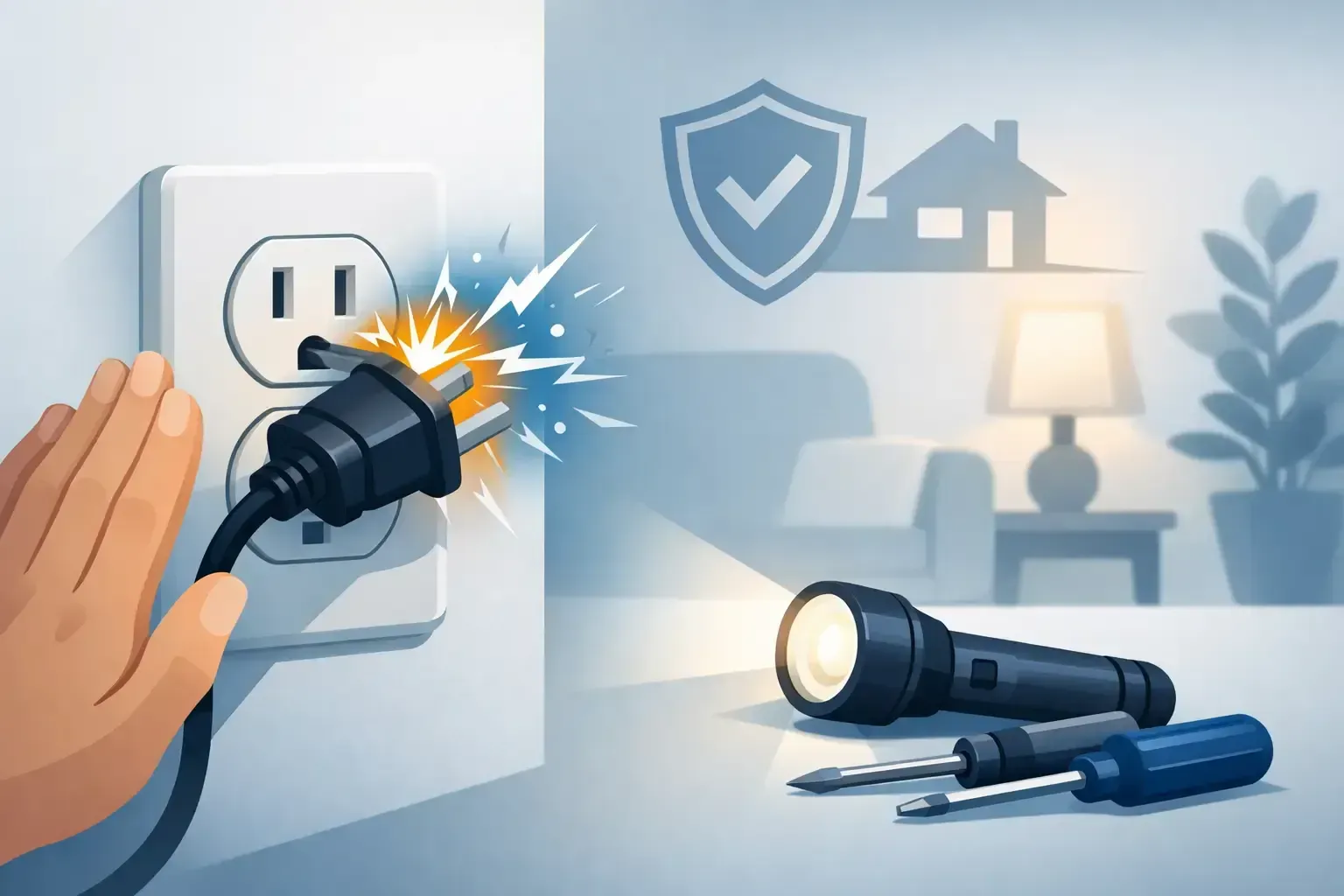
A brief blue flash when you plug in a vacuum, phone charger, or kitchen appliance can be unsettling. If you are asking, why does my outlet spark, the answer depends on what the spark looked like, how often it happens, and whether there are other warning signs such as heat, odor, discoloration, or tripped breakers.
A tiny, quick spark can occur when electrical current first connects. A larger spark, a repeated spark, or any spark accompanied by heat or damage is not something to ignore. Electrical problems can worsen behind the wall long before an outlet stops working completely.
Why Does My Outlet Spark When I Plug Something In?
A small spark can happen when the metal prongs of a plug make contact with the energized parts inside a receptacle. This is called an electrical arc. It is more common when the item being plugged in is already switched on or draws a larger amount of power at startup.
For example, vacuums, power tools, hair dryers, window air conditioners, and appliances with motors can create a brief spark as they begin drawing current. A charger or electronic device may also produce a very small flash because of components inside its power supply.
A normal spark should be small, quick, and occasional. It should not make a popping sound, leave a burn mark, smell hot, or cause the outlet faceplate to feel warm. If any of those things happen, treat the outlet as a safety concern rather than a minor annoyance.
Warning Signs That Mean You Should Stop Using the Outlet
The color and behavior of the spark matter. A tiny blue or white flash that appears once as a plug is inserted can be normal. Yellow, orange, or red sparking is more concerning because it may indicate heat, deteriorated wiring, or sustained arcing.
Stop using the outlet and avoid plugging anything else into it if you notice any of the following:
- Sparks that are large, frequent, or continue after the plug is inserted
- A burning, fishy, or melting-plastic smell
- Brown, black, or melted marks on the outlet, plug, or wall plate
- An outlet that feels warm, loose, cracked, or makes buzzing or popping sounds
- A breaker that trips repeatedly when the outlet is used
- Flickering lights, intermittent power, or a plug that will not stay firmly in place
If there is smoke, visible flame, or an active electrical fire, get people out of the area and call 911. Do not throw water on an electrical fire. If it is safe to do so, turn off power to the affected circuit at the breaker panel, but do not take risks to reach the panel.
Common Causes of a Sparking Outlet
Loose outlet connections
Outlets wear out. The internal contacts that grip the plug blades can become loose over time, especially in frequently used locations such as kitchens, living rooms, garages, and rental units. A loose connection can create arcing as electricity jumps across a small gap instead of flowing cleanly through the connection.
Loose wiring behind the receptacle can cause the same problem. This is not visible from the front of the outlet, which is why a working outlet is not necessarily a safe outlet.
Damaged plugs or cords
Sometimes the outlet is not the source of the problem. Bent plug prongs, damaged insulation, frayed cords, and loose charger blocks can create poor contact and spark when inserted. If one appliance sparks in multiple outlets, stop using that appliance until its cord or plug can be repaired or replaced.
On the other hand, if several devices spark only at one outlet, the receptacle or wiring is the more likely issue.
Overloaded circuits and power strips
An outlet can be part of a circuit serving several rooms or appliances. Running space heaters, microwaves, countertop appliances, entertainment equipment, and portable air conditioners on the same circuit can push it beyond its intended load.
Power strips do not create more available power. They only provide more places to plug things in. Overloading a strip or using a low-quality extension cord can lead to heat buildup at the plug and receptacle. High-wattage appliances should generally be plugged directly into a properly rated wall outlet, not into a power strip or lightweight extension cord.
Moisture near the receptacle
Water and electricity do not mix. Bathroom, kitchen, laundry, garage, exterior, and sprinkler-system outlets are more exposed to moisture than other areas of a home. Condensation, a small plumbing leak, wet hands, or water intrusion from outdoors can cause corrosion and arcing.
Ground-fault circuit interrupter, or GFCI, outlets are designed to reduce shock risk in these areas. If a GFCI outlet trips repeatedly, do not keep resetting it without finding the cause. The outlet may be detecting a real fault, moisture issue, or appliance problem.
Aging or improper electrical work
Older homes may have worn receptacles, outdated wiring methods, undersized circuits, or past repairs that were never completed correctly. Newer homes are not immune, either. Loose terminations, improperly installed receptacles, and damaged wiring can develop in any property.
In Boise-area homes, seasonal temperature changes, garage use, workshop equipment, and outdoor moisture can all expose weak electrical connections. A professional inspection can identify whether the concern is limited to one device, one outlet, or a larger circuit issue.
What to Do When an Outlet Sparks
First, unplug the device if it can be done safely. Hold the plug itself, not the cord. If the outlet is hot, smoking, visibly damaged, or actively sparking, do not touch it. Turn off the breaker that controls the outlet if you can identify it safely.
Next, inspect the plug and cord without taking apart the outlet. Look for bent blades, cracks, melted areas, fraying, or discoloration. If the device appears damaged, do not test it in another outlet.
If the outlet has no heat, odor, or visible damage and the spark was very small, you can test a different low-power device only if the original device was the likely cause. However, repeated sparking is a reason to stop testing and schedule an electrician. Repeatedly plugging items in to "see if it happens again" can turn a loose connection into a burned receptacle or damaged wiring.
Do not remove the outlet cover or pull the receptacle from the wall unless you are qualified to perform electrical work. The power can remain present even when an outlet appears dead, and wiring errors can create a serious shock or fire hazard.
When a Licensed Electrician Should Inspect It
Call for professional electrical service promptly if the outlet sparks more than once, has visible damage, feels warm, smells unusual, trips a breaker, or serves an important appliance. An electrician can check the receptacle condition, wiring connections, grounding, circuit load, breaker operation, and whether the outlet has the proper GFCI or arc-fault protection.
The repair may be as simple as replacing a worn receptacle, but it can also reveal a loose splice, damaged wire, overloaded circuit, or water intrusion. That is the trade-off homeowners cannot see from the outlet face: replacing the visible device may not solve the problem if the issue is farther back in the electrical system.
For landlords and property managers, a sparking outlet deserves a fast response. Tenants may continue using it, plug in high-demand appliances, or cover warning signs with furniture. Addressing it early protects the property and helps avoid a more disruptive emergency repair.
A Simple Habit That Reduces Outlet Problems
Before plugging in an appliance, turn it off when possible. Insert the plug firmly and straight, and avoid using cords with damaged insulation or loose prongs. Replace outlets that no longer hold plugs securely, and use appropriately rated GFCI protection where water is present.
An outlet should provide quiet, dependable power without heat, odor, noise, or repeated flashes. When it does not, taking it out of service and having the cause checked is a practical way to protect your home, your tenants, and the people who use the space every day.