That diagnostic approach matters because heat pumps are more than outdoor air conditioners running backward. A part can be working well enough to avoid a complete shutdown while still causing high energy use and uneven comfort.
If your irrigation system is due for testing, treat the appointment as a practical part of spring property care. A properly tested assembly gives you one less thing to worry about when it is time to turn the water on and enjoy the season.
When to Winterize Sprinklers Before Boise Freezes
August 1, 2026
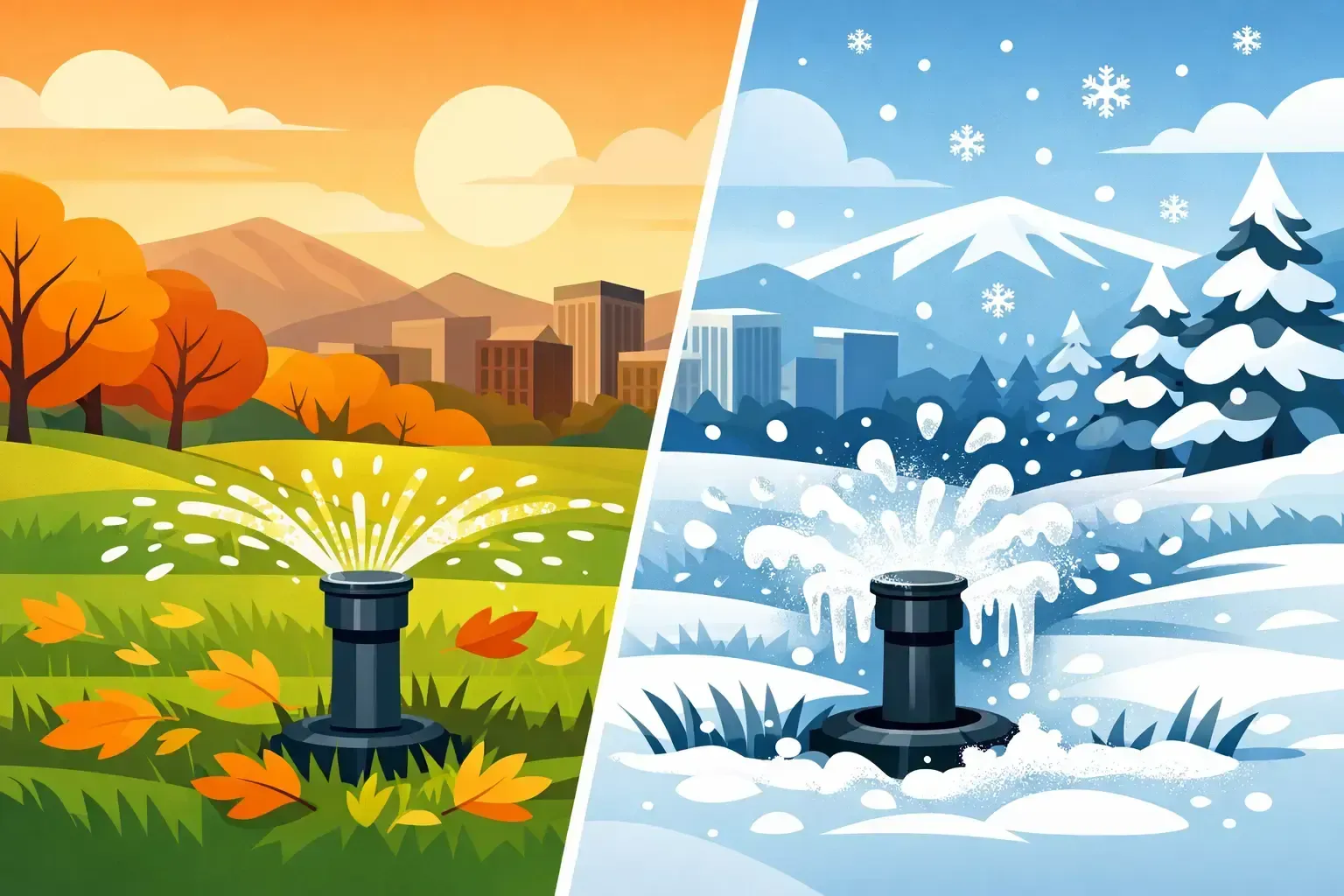
A warm October afternoon can make sprinkler shutdown feel like a task for next weekend. Then one sharp overnight freeze arrives, and the water left in an exposed backflow assembly, valve, or pipe becomes an expensive spring repair. When to winterize sprinklers is less about picking the same calendar date every year and more about acting before freezing temperatures put your system at risk.
For homeowners and property managers in the Boise area, the practical goal is simple: have the irrigation system professionally winterized before regular overnight freezing begins. Do not wait for snow, frozen ground, or the first damaged sprinkler component to make the decision for you.
When to Winterize Sprinklers in Boise
Most properties should plan sprinkler winterization for late September through October. The precise timing changes with the weather, your property's elevation, and how much of the system is exposed above ground.
A light frost on the lawn is not always an emergency. Soil and buried pipes retain heat, and a brief dip to 32 degrees may not freeze water deep underground. But sprinkler systems have vulnerable components that do not get that protection. Above-ground backflow preventers, shutoff piping, vacuum breakers, valve manifolds, and outdoor hose connections can freeze well before the ground does.
The safer rule is to schedule service before forecasts begin showing repeated overnight lows near or below freezing. If temperatures are expected to reach 28 degrees or lower, especially for several hours, do not assume your system will be fine because the days are still mild. A hard freeze can crack plastic fittings, damage brass components, split pipes, and harm a backflow device in a single night.
Early scheduling also gives you more choice. Once the first cold forecast appears, sprinkler service schedules fill quickly. Planning ahead helps avoid the rush and gives you time to address a leaking valve, damaged sprinkler head, or backflow issue discovered during shutdown.
Why Waiting Can Cost More Than Winterization
Water expands when it freezes. That basic fact creates the problem inside an irrigation system. Even a small amount of trapped water can put enough pressure on a fitting or component to cause damage.
Some winter damage is obvious. You may find a cracked backflow assembly or a broken pipe when you turn the system on in spring. Other problems stay hidden underground, where a split lateral line or damaged valve connection can waste water and create soft, saturated areas in the yard after startup.
The trade-off is clear. Winterizing early may mean giving up a few weeks of automatic watering during an unusually warm fall. Waiting too long can mean repair costs, delayed spring startup, landscape damage, and the inconvenience of coordinating additional service. Most established lawns and landscapes need less water as fall temperatures drop, so protecting the system is generally the better decision.
Watch the Forecast, Not Just the Calendar
A calendar reminder is useful, but it should not be your only signal. Fall weather can shift quickly across Ada and Canyon Counties. A property in a colder, more exposed area may need attention sooner than a sheltered yard in town.
Pay particular attention to overnight lows, wind, and duration. Clear, calm nights can produce localized freezing even when the broader forecast seems borderline. Wind can also make exposed equipment colder faster, especially a backflow preventer mounted along an exterior wall.
If you manage rentals or multiple properties, build winterization into your seasonal maintenance plan rather than reacting property by property. Confirm which sites have irrigation, note the location of each shutoff and backflow assembly, and schedule them before the cold-weather rush. That approach is easier on tenants, owners, and maintenance budgets.
What Proper Sprinkler Winterization Includes
Winterization is more than turning off the irrigation controller. A properly protected system needs the water supply shut off and residual water removed from the portions of the system where freezing can cause damage.
The process often begins by shutting off the dedicated irrigation water supply. The controller is then turned off or placed in an appropriate rain or seasonal setting so valves do not run during winter. Depending on the system design, a technician will drain accessible components and use compressed air to clear water from irrigation lines.
Blowout service requires care. Too much air pressure, the wrong connection point, or running air through the system for too long can damage pipes, valves, fittings, or sprinkler heads. Different materials and system layouts have different limits. This is one reason a generic online instruction does not fit every property.
The backflow assembly deserves special attention. It is one of the most exposed and valuable parts of many irrigation systems, and it plays a critical role in protecting the potable water supply from contamination. Proper shutdown includes relieving trapped water and positioning valves as appropriate for the equipment. Insulation can help protect an assembly, but it is not a substitute for draining it correctly before freezing weather.
Signs You Should Schedule Now
You do not need to wait until every tree has dropped its leaves. Schedule winterization promptly if the forecast shows freezing nights, your backflow preventer is above ground, or your system has a history of freeze damage.
The same applies if you will be traveling, closing a seasonal property, or do not know whether the irrigation shutoff is working. An unoccupied property is a poor place to take chances with a cold snap. It is much easier to shut the system down on your schedule than to discover a leak after temperatures rise again.
If your irrigation system was recently repaired or modified, winterization is also a good time to make sure it is being shut down through the correct connection and that all relevant zones are cleared. Small details matter when water is moving through multiple valves, lines, and elevation changes.
Can You Winterize Your Own Sprinklers?
Some homeowners can complete basic steps, such as turning off the controller and locating the irrigation shutoff. If your system has manual drains and you understand the layout, you may be able to drain certain exposed components yourself.
A full compressed-air blowout is different. It requires the right equipment, correct pressure, and a clear understanding of the system. There is also a safety concern: pressurized air and irrigation components can cause injury or equipment damage when handled incorrectly. For many homeowners, especially those with a backflow device or an unfamiliar system, professional winterization is the more reliable choice.
A qualified technician can also spot issues that are easy to miss during a do-it-yourself shutdown, including worn shutoff valves, leaking fittings, damaged insulation, or a backflow assembly that needs repair. Addressing those items before winter can prevent a more complicated spring service call.
Do Not Forget the Spring Plan
Winterization protects the system now, but it also sets up a smoother spring startup. Keep a record of any repairs or concerns found during shutdown. If a valve was difficult to operate, a zone had poor pressure, or the backflow assembly showed signs of wear, make a note before the details fade over winter.
In spring, the system should be brought back online carefully, with the water supply opened gradually and each zone checked for leaks, broken heads, and proper coverage. Winterization and startup work best as a seasonal pair, not as isolated tasks.
M Property Services helps Boise-area homeowners and property managers handle sprinkler and backflow service with the same straightforward care applied to the rest of the property. The right time to schedule is before the forecast forces the issue. A planned shutdown protects your irrigation investment and lets you head into winter with one less property concern on your list.