Last Updated: October 22, 2026
Quick Summary
A whole-home surge protector is a device installed at your main electrical panel that guards your entire house against voltage spikes, protecting every circuit at once instead of just individual outlets. For older homes, it is worth the investment because it extends the lifespan of expensive equipment like furnaces and water heaters by preventing gradual surge-related degradation, and it provides a documented improvement for insurance and resale.
- A whole-home surge protector diverts excess voltage to ground in nanoseconds, protecting HVAC systems, water heaters, and all appliances simultaneously.
- Older homes are more vulnerable to surge damage because wiring and panels were designed for lower power demands than modern equipment requires.
- Installation requires a licensed electrician to verify panel compatibility, grounding adequacy, and code compliance; DIY installation voids warranties and may violate local codes.
- Typical lifespan is 5-10 years depending on how many surges the device absorbs; replacement is straightforward once the device fails.
- Combine a whole-home protector with plug-in surge protectors at valuable electronics for layered protection that catches both major and internal surges.
Table of Contents
- What Is a Whole-Home Surge Protector?
- How Whole-Home Surge Protectors Work
- Whole-Home Surge Protector Benefits for Older Homes
- Whole-Home Surge Protector vs. Plug-In Surge Protector: Which Approach Works Best
- Whole-Home Surge Protector Installation for Older Electrical Systems
- Whole-House Surge Protector Lifespan and Maintenance
- Is the Investment Worth It? A Financial Perspective
- Frequently Asked Questions
What Is a Whole-Home Surge Protector?
A whole-home surge protector is a device installed at your main electrical panel that guards your entire house against voltage spikes.
Voltage spikes happen constantly. Lightning is the dramatic source, but most surges come from power grid fluctuations, utility switching, and large appliances.
A whole-home surge protector sits between your service entrance and your home's electrical system.
Point-of-use protectors guard only what's plugged into them. A whole-home system protects everything at once: HVAC, water heater, refrigerator, smart home devices, and electronics.
How Whole-Home Surge Protectors Work
A surge is any sudden increase above your system's standard voltage. When one arrives, a whole-home surge protector springs into action instantly.
The device uses a component called a transient voltage surge suppressor, which monitors incoming voltage constantly.
Think of it like a pressure relief valve on a water pipe: when pressure gets too high, the valve opens and releases the excess.
Response time matters.
The device also has a grounding connection that carries diverted energy safely away.
Whole-Home Surge Protector Benefits for Older Homes
Older homes face unique electrical challenges. Many were built before modern appliances existed.
The Shocking Truth: Why You Need Whole House Surge Protection
Charleston Home
Protection for aging systems. HVAC systems, water heaters, and panels are expensive, and spikes degrade them over time.
Safety improvements. Older homes often have outdated panels, and surges can overheat wiring and create fire hazards.
Insurance considerations. Some insurers offer premium discounts for homes with whole-home surge protection, varying by provider and policy.
Peace of mind with smart devices. Thermostats, security systems, and smart appliances are sensitive to voltage fluctuations.
Whole-Home Surge Protector vs. Plug-In Surge Protector: Which Approach Works Best
These two types of surge protection serve different purposes.
Plug-in surge protectors are affordable and easy to install yourself.
The problem is coverage. A plug-in protector only guards what's plugged into it, so your water heater, HVAC system, and refrigerator get no protection.
Whole-home surge protectors guard everything at once, including circuits you rarely think about: the garage, outdoor outlets, and built-in appliances.
The trade-off is installation: a whole-home protector requires a licensed electrician at your main panel.
The best approach combines both. Install a whole-home protector at the panel for baseline protection, then use plug-in protectors for your most valuable electronics.
Whole-Home Surge Protector Installation for Older Electrical Systems
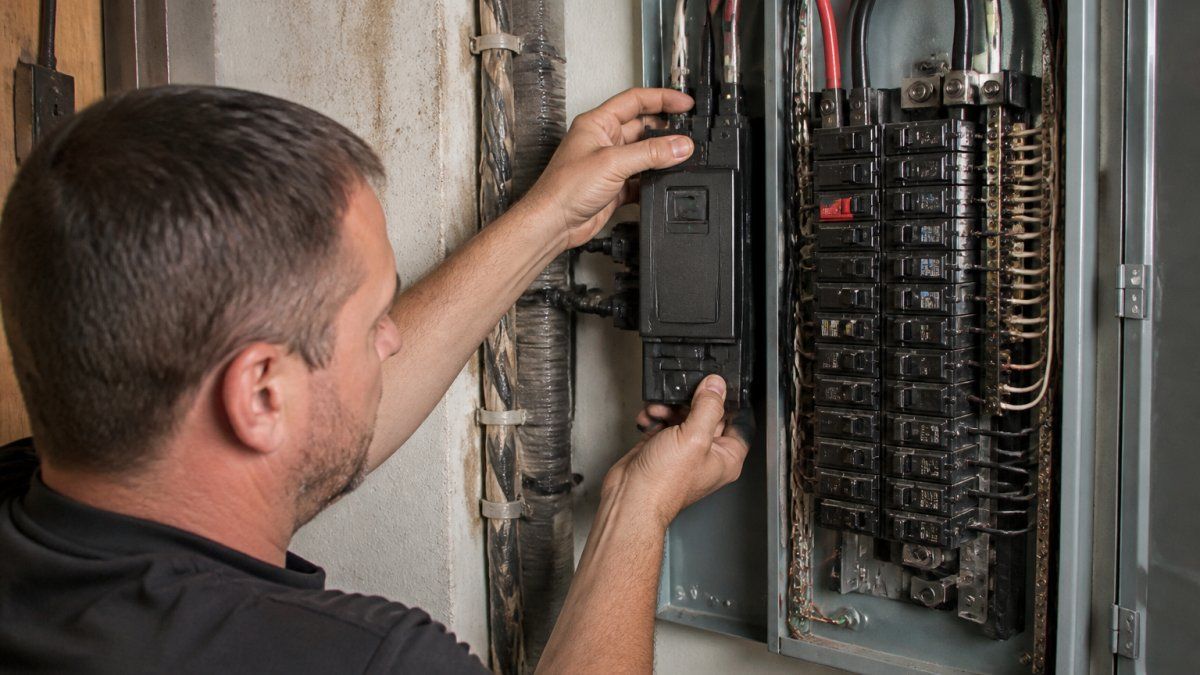
Installing a whole-home surge protector in an older home is rarely a plug-and-play job. The device itself is simple, but the panel it connects to often is not.
Panel compatibility: what actually determines fit
A whole-home SPD needs a dedicated two-pole breaker slot (typically 20A or 30A, depending on the manufacturer) or a separate enclosure mounted beside the panel. In older homes, three constraints show up again and again:
- No spare breaker slots. Many 100A panels from the 1960s-1980s are full. Options include a tandem-breaker rearrangement (only where the panel is listed for it), a subpanel, or a panel replacement. An electrician must confirm the panel's listing and busbar rating before any rearrangement.
- Obsolete or recalled panel brands. Certain legacy panels are known to have failure modes independent of surge protection, and some insurers and electricians will not add equipment to them. If your panel falls into that category, the honest answer may be that a panel upgrade comes first.
- Fuse boxes. A traditional fuse box generally cannot accept a modern SPD without a service upgrade. Fuses are not inherently unsafe, but the enclosure, bus, and available capacity usually are not rated for the added device.
A licensed electrician should perform a load calculation and visual inspection before quoting the job. This is the step most homeowners skip, and it is the step that determines whether the project is a one-hour install or a panel upgrade.
Grounding and bonding: the part that makes it work
An SPD diverts surge current to ground. If the grounding electrode system is inadequate, the device cannot perform as designed and may not survive a surge. Older homes commonly have:
- A single ground rod without a supplemental electrode
- Grounding bonded only to a water pipe, with no rod
- No visible grounding electrode conductor at the service
Where grounding is deficient, the electrician may need to add or upgrade the grounding electrode system and verify bonding of metal water and gas piping per the National Electrical Code (NFPA 70). This is not optional polish; it is the mechanism by which the protector protects anything at all.
DIY vs. professional installation
Panel work is not a homeowner DIY task in any practical or legal sense. The work involves the service entrance, live conductors, and the main bonding jumper. Beyond shock and arc-flash risk, there are three practical reasons to use a licensed electrician:
- Code compliance. SPD installation must follow manufacturer instructions and NEC requirements for the device's location, conductor length, and grounding. Short, straight conductor runs matter; a sloppy install degrades performance.
- Permits and inspection. Many jurisdictions require an electrical permit for panel work. An inspection protects you at resale and satisfies insurer documentation requests.
- Warranty and insurance. Manufacturer warranties and homeowner policies commonly assume licensed installation. A self-installed SPD can void both.
What the install actually looks like
For a compatible panel with a spare slot and adequate grounding, the process is typically 1-2 hours: power off at the main, breaker and SPD mounted, conductors run as short and straight as possible, grounding verified, system energized and tested. If grounding upgrades or a subpanel are needed, plan for a longer day and a higher scope. Your electrician should give you a written scope that names the panel, the SPD model, the breaker type, and whether grounding work is included.
If you need help assessing your panel and planning the installation, a licensed electrician can handle the coordination of the work. For older homes in the Treasure Valley, having a trusted local professional evaluate your electrical system before committing to the project can save time and prevent costly surprises.
Whole-House Surge Protector Lifespan and Maintenance
A whole-home surge protector doesn't last forever. Understanding its lifespan helps you plan for replacement.
Maintenance is minimal. It works silently in the background with no regular service or testing required.
Replacement is straightforward. At end of life, a licensed electrician swaps it out in about an hour, restoring full protection.
Warning signs it needs replacement:
- Breaker trips frequently with no apparent cause
- Visible damage or burn marks on the device
- The device is more than 10 years old
- You've experienced major surges recently
Some surge protectors include indicator lights that show when they've failed. Check your device's manual to learn how to identify end-of-life conditions.
Is the Investment Worth It? A Financial Perspective
The honest answer is that a whole-home surge protector is worth it for most older homes, but not for the reason most articles give. It is not primarily a lightning defense. It is a wear-and-tear and failure-rate play on the expensive equipment already in your home, plus a small insurance and documentation benefit most homeowners never claim.
The real financial mechanism
Surges degrade equipment gradually. A furnace control board, refrigerator compressor, well pump, or heat pump inverter usually dies earlier than it should because repeated small overvoltage events stress its electronics.
The financial case is therefore a replacement-timing case. If surge protection pushes a furnace replacement out by two or three years, or prevents one mid-winter emergency replacement at premium labor rates, the device has paid for itself. If it prevents nothing, it has not. That is the trade-off, stated plainly.
Insurance: how to actually capture the discount
Some insurers offer a premium credit or discount for homes with a professionally installed whole-home SPD, but it is not universal and it is rarely advertised. The way to find out is procedural, not rhetorical:
- Call your agent and ask specifically whether the policy schedule includes a protective-device credit for a panel-mounted surge protective device.
- Ask what documentation they require, typically the electrician's invoice naming the device and the permit/inspection record.
- Ask whether the credit applies at renewal only, and whether it is a flat dollar credit or a percentage of the premium.
- Get the answer in writing before you authorize the install.
Resale and disclosure
A permitted, inspected SPD installation is a small but real selling point for an older home, because it signals that the electrical system has been maintained and documented. Keep the invoice, the permit record, and the inspection sign-off with your home records. Buyers and their inspectors respond to paperwork, not to a device they cannot identify.
The layered strategy, priced honestly
A whole-home SPD is the first layer. Point-of-use protectors at sensitive electronics are the second, cheap insurance for devices most likely damaged by internal surges from appliances switching on and off. The whole-home unit reduces the surge energy they see rather than replacing them. Budget for both, and treat the panel device as the foundation, not the whole solution.
When it is not worth it
Be skeptical if any of these apply: your panel is obsolete and due for replacement anyway (do the panel first), your grounding is inadequate and you are unwilling to fix it (the SPD will underperform), or your home has very little high-value equipment to protect.
For most older homes with a serviceable panel and real equipment to protect, the investment is justified, not by a dramatic lightning save, but by slower equipment degradation, a documented insurance conversation, and a cleaner resale story.
Frequently Asked Questions
What are the main benefits of a whole-home surge protector for older homes?
Whole-home surge protectors defend your entire electrical system against voltage spikes from lightning strikes, utility power fluctuations, and internal surges. For older homes with aging wiring and appliances, this protection extends equipment lifespan, prevents electrical fires, and safeguards sensitive electronics like HVAC systems and home automation devices. A single point-of-use surge protector cannot shield your entire home the way a whole-home unit installed at the service entrance does.
Can a whole-home surge protector be installed in an older home's electrical panel?
Yes, but compatibility depends on your panel's age and condition. Older panels may have space limitations or outdated grounding systems that affect installation. A licensed electrician can assess whether your panel meets NEC code requirements and has adequate capacity for a transient voltage surge suppressor. Some older homes benefit from a layered protection strategy combining whole-home and point-of-use protectors for maximum safety.
How long does a whole-house surge protector last?
Most whole-home surge protectors last 5 to 10 years, depending on how many surges they absorb and environmental factors. Each surge reduces the device's joule rating and clamping voltage effectiveness. Many units include indicator lights or warranty coverage that alerts you when replacement is needed. Regular inspection by a licensed electrician ensures your home stays protected as the device ages.
Do I need both a whole-home and plug-in surge protector?
A layered protection strategy works best for older homes. The whole-home unit guards your electrical panel and main circuits, while point-of-use surge protectors shield sensitive electronics at individual outlets. This dual approach prevents damage to high-value appliances and devices even if the whole-home unit absorbs a major surge. Together, they provide comprehensive defense against both external and internal voltage spikes.