Table of Contents
- Why Contractor No-Shows Happen and How to Spot the Risk
- Use a Contractor Vetting Checklist Before You Hire
- Key Questions to Ask a Contractor Before Hiring
- Lock in a Written Contract and Scope of Work
- Send a Contractor Appointment Confirmation Text 24 Hours Before
- What to Do When a Contractor Doesn't Show Up
- Red Flags That Signal an Unreliable Contractor
- Frequently Asked Questions
Last Updated: October 20, 2026
Why Contractor No-Shows Happen and How to Spot the Risk
Contractor no-shows are frustrating and costly. A missed appointment wastes your time, delays your project, and disrupts your schedule. Understanding why no-shows happen helps you avoid contractor no-shows by spotting unreliable contractors before you hire them.
Common reasons contractors miss appointments include poor scheduling systems, overbooking, lack of accountability, and disorganization. Some contractors take on more jobs than they can handle. Others simply lack the discipline to show up on time.
Red flags often appear early. A contractor who's hard to reach, vague about timing, or dismissive of your scheduling concerns will likely be unreliable. The good news: you can avoid most no-shows by vetting contractors carefully upfront and using simple confirmation systems.
Proper vetting and clear communication can eliminate the vast majority of scheduling problems. When you establish expectations early and document everything, contractors know you're serious about reliability.
Use a Contractor Vetting Checklist Before You Hire
A contractor vetting checklist helps you evaluate reliability before you sign anything. This simple tool catches red flags and identifies professionals you can trust.
Your checklist should cover three core areas: credentials, references, and communication. Contractors who pass all three categories are far more likely to show up and complete work professionally.
Verify Licenses, Insurance, and Credentials
Every contractor should hold a valid license for their trade. Licensing proves they've met training requirements and passed exams in their field. It also means they're subject to regulatory oversight and complaint processes.
Check your state's licensing board website to verify the contractor's license status. Search by name or license number. A valid license is non-negotiable for electrical, HVAC, and plumbing work.
Insurance is equally important. Ask for proof of general liability insurance and workers' compensation coverage. Liability insurance protects your home if the contractor damages it. Workers' compensation covers injuries to the contractor's crew on your property.
Many contractors carry both. Some carry only one. Either way, get it in writing before work starts. A contractor without insurance is a major risk.
Bonding is a third layer of protection. A bond guarantees that the contractor will complete the work or refund your money. Not all contractors carry bonds, but it's a strong sign of professionalism when they do.
Review References and Past Work
Ask for at least three recent references from similar projects. Call them. Ask specific questions: Did the contractor show up on time? Was the work quality good? Would you hire them again?
References reveal patterns. A contractor with five glowing reviews is more reliable than one with one positive review and two complaints about missed appointments.
Ask to see photos of past work. Better yet, visit a completed project in person if possible. This shows the contractor's actual quality and gives you confidence in their abilities.
Check online reviews on Google, Yelp, and the Better Business Bureau. Look for patterns in complaints. One negative review might be an outlier. Multiple complaints about no-shows or delays reveal a real problem.
Key Questions to Ask a Contractor Before Hiring
Asking the right questions during your initial consultation reveals a lot about a contractor's professionalism and reliability.
Start with scheduling questions. Ask how far in advance they book appointments. Ask how they confirm appointments with customers. Ask what happens if they need to reschedule. A contractor with a clear answer to each question has a system in place.
Ask about communication. How will they update you on progress? How quickly do they respond to calls and emails? Do they provide a project timeline in writing?
Ask about their crew. Do they work alone or with a team? Will the same person show up for follow-up visits? Consistency matters. If a contractor brings a different crew member each time, there's more room for miscommunication and missed appointments.
Ask about payment terms. Do they require a deposit? How much? When is the balance due? A contractor asking for a reasonable deposit upfront is normal. One asking for 50% or more before any work is done is a red flag.
Ask about change orders. What happens if the scope changes during the project? How do they document and price changes? A professional contractor explains this clearly.
Lock in a Written Contract and Scope of Work
A written contract protects both you and the contractor. It documents what work will be done, when it will be done, and how much it will cost. It also sets expectations for communication and accountability.
Your contract should include a detailed scope of work. This describes exactly what the contractor will do. Vague language like "fix the electrical issue" isn't enough. Write "Replace the faulty outlet in the kitchen and test all outlets in the master bedroom."
Include specific start and completion dates. Don't just write "sometime in October." Write "Work begins October 15, 2026, and is expected to complete by October 22, 2026." This creates accountability.
Add a clause about what happens if the contractor doesn't show up.
Include contact information for both parties. List your phone number, email, and preferred contact method. List the contractor's phone, email, and physical address. Make it easy to reach each other.
Specify payment terms in writing. Include the total cost, deposit amount, and when the balance is due. Include your preferred payment method. This prevents disputes later.
Have both you and the contractor sign and date the contract. Keep a copy for your records.
Send a Contractor Appointment Confirmation Text 24 Hours Before
A simple text message 24 hours before the appointment dramatically reduces no-shows.
Send the text to the phone number the contractor provided. Keep it brief and professional: "Hi [Contractor Name], confirming our appointment tomorrow, [Date], at [Time]. Please reply to confirm. Thanks."
If the contractor doesn't respond within a few hours, call them. A lack of response is a warning sign. They may have forgotten about the appointment or double-booked.
If they confirm, great. You know they're planning to show up. If they say they need to reschedule, you have time to find an alternative or adjust your schedule.
Some contractors use automated reminder systems. Ask during your initial contact if they send appointment reminders. If they do, that's a good sign they take no-shows seriously.
Keep records of all confirmation texts and responses. If the contractor later claims they never received notification, you have proof.
What to Do When a Contractor Doesn't Show Up
A no-show is frustrating, but how you respond matters. Taking the right steps protects your interests and creates a clear record.
Document the Missed Appointment
Write down the date, time, and what was supposed to happen. Note exactly when you realized the contractor wasn't coming. Did they call ahead? Did you have to call them?
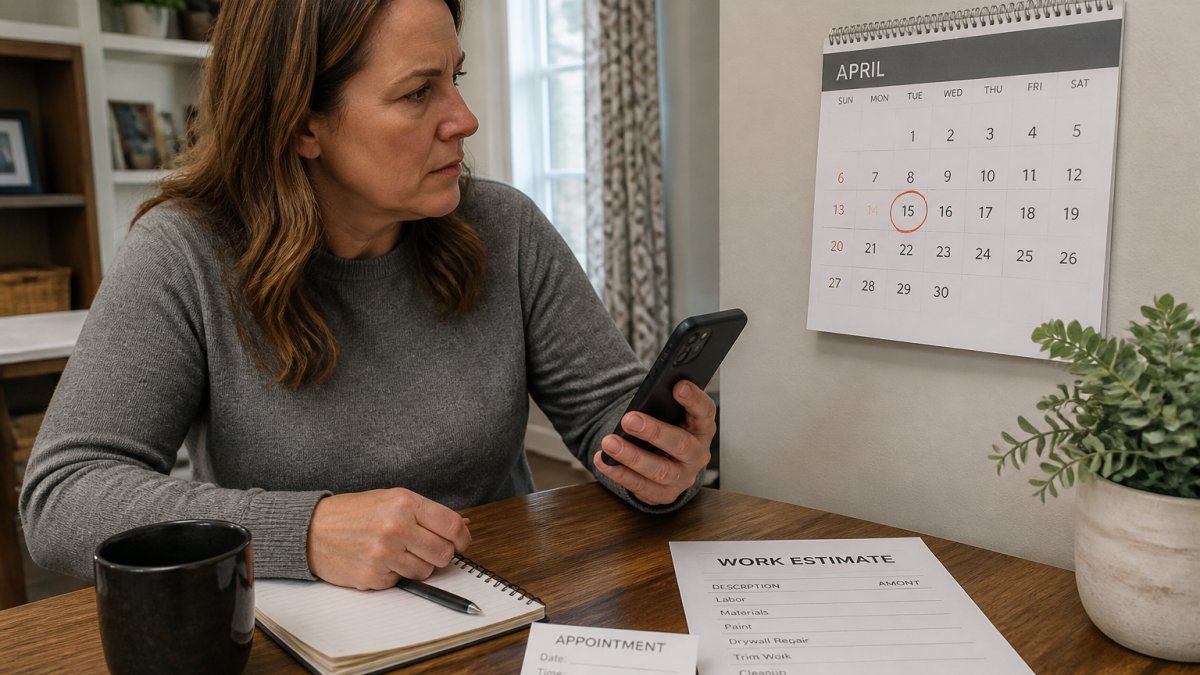
Take a photo of your calendar or appointment reminder showing the scheduled date and time. Save the text messages or emails confirming the appointment. Save any voicemails from the contractor.
This documentation is essential if you need to pursue a refund or file a complaint later.
Follow Up and Set a Response Deadline
Call the contractor immediately after the missed appointment. Stay calm and professional. Say: "You missed our appointment today at [time]. I need an explanation and a new appointment time within 24 hours."
Send a follow-up email restating the same message. Include all the documentation: the contract, the appointment confirmation, and the time you tried to reach them. Write: "I'm giving you until [specific time tomorrow] to respond with an explanation and a rescheduled appointment."
If the contractor responds with a legitimate emergency (illness, vehicle breakdown, family crisis), consider rescheduling. Most people deserve one second chance.
If they don't respond within 24 hours, that's a pattern. Send a second email: "You have not responded to my previous messages. I am canceling our contract effective immediately and requesting a full refund of my deposit within 7 days."
Know When to Walk Away
One missed appointment might be an accident. Two missed appointments is a pattern. Three is abandonment.
If a contractor misses more than one appointment, terminate the relationship. Don't wait for a third no-show. Your time is valuable, and there are reliable contractors available. If you need help with smaller jobs or repairs, consider hiring a Handyman service, which often has more flexible scheduling and faster availability than specialized contractors.
If the contractor refuses to refund your deposit after missing appointments, file a complaint with the appropriate licensing board. Document everything and submit your evidence.
Consider leaving an honest review on Google and the Better Business Bureau. Describe what happened factually. Other homeowners deserve to know about repeated no-shows.
Red Flags That Signal an Unreliable Contractor
Certain warning signs predict no-shows and poor performance. Learning to spot them early saves time and money.
A contractor who is hard to reach during the initial consultation will be harder to reach once work begins.
Vague pricing is a red flag. A contractor who won't provide a written estimate or keeps changing the price is disorganized or dishonest.
Pressure to pay cash upfront is suspicious. Cash payments leave no paper trail and make it harder to pursue refunds if something goes wrong.
A contractor who won't provide references or gets defensive about their track record has something to hide. Professionals are proud of their work.
Negative reviews mentioning no-shows or missed deadlines should disqualify a contractor. One complaint might be unfair. Multiple complaints about the same issue are a pattern.
A contractor who seems disorganized during the sales process will be disorganized during the work. If their paperwork is messy, their scheduling probably is too.
| Red Flag | What It Means | What to Do |
|---|---|---|
| Hard to reach | Disorganized or low priority | Keep looking |
| Vague pricing | Unprofessional or dishonest | Get written estimate |
| Cash-only payment | Avoiding accountability | Use check or card |
| No references | Hiding poor track record | Walk away |
| Negative reviews about delays | Pattern of no-shows | Choose someone else |
| Disorganized initial contact | Poor scheduling systems | Find a professional |
To avoid contractor no-shows, start with careful vetting and clear communication.
M Property Services understands that your time matters. When you need reliable service in your area, get a quote and experience the difference that professional accountability makes.
Frequently Asked Questions
How can I tell if a contractor is reliable before hiring them?
Check for active licenses and insurance with your state or local licensing board, call at least two references who can speak to punctuality and quality, review online ratings and past work photos, and ask direct questions about their scheduling practices and communication process. A reliable contractor will provide verifiable credentials, answer questions thoroughly, and offer a written scope of work and project timeline upfront.
What should I include in a contractor agreement about scheduling?
Your written contract should specify the exact start date and completion date, work hours, how delays will be communicated, consequences for no-shows, and the process for rescheduling if the contractor cannot make an appointment. Include a clause requiring 24-hour notice if the contractor cannot arrive, and state that repeated no-shows without notice are grounds to terminate the agreement.
What do I do when a contractor doesn't show up?
Document the missed appointment with the date, time, and any communication attempts. Send a written follow-up (email or text) the same day asking for an explanation and requesting confirmation of a new appointment within 48 hours. If the contractor doesn't respond or misses a second appointment, send a follow-up communication giving them a final deadline to respond. If no response comes, consider the agreement abandoned.
Should I pay a contractor before work begins?
Avoid paying the full amount upfront. A reasonable deposit is typically 10-25% of the total project cost, held until work is complete and you've inspected it. Never pay in cash only, and never pay before the contractor has provided a written estimate, scope of work, and confirmed start date in writing. Payment terms should be in your written contract and tied to completion milestones.