That diagnostic approach matters because heat pumps are more than outdoor air conditioners running backward. A part can be working well enough to avoid a complete shutdown while still causing high energy use and uneven comfort.
When to Call a Meridian Furnace Repair Service
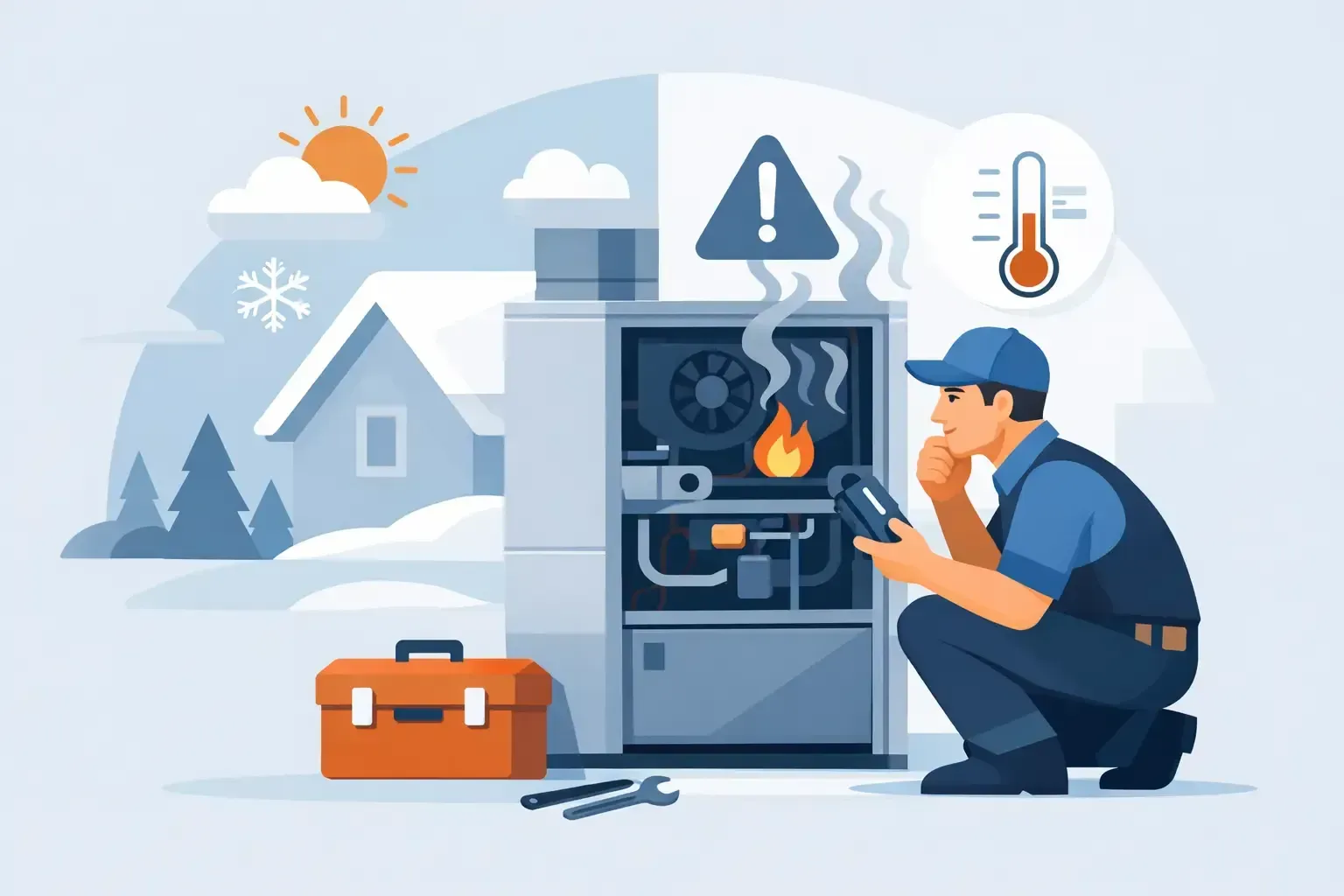
A furnace rarely quits at a convenient time. It usually happens on the first hard freeze, before guests arrive, or when a tenant calls after business hours because the house is getting colder by the minute. A dependable meridian furnace repair service helps restore heat, but the best repair visit also identifies why the problem happened and whether there is a safety concern that needs attention.
For homeowners and property managers, the goal is not just getting warm air again. It is protecting the equipment, avoiding repeat breakdowns, and making a clear decision about repair versus replacement. Knowing what to check first can save time. Knowing when to stop troubleshooting and call a qualified technician can protect your property and the people inside it.
Signs Your Furnace Needs Professional Repair
Some furnace problems are obvious. Others start small and become expensive if they are ignored. If your system turns on but never reaches the thermostat setting, cycles on and off every few minutes, or blows cool air, it needs attention. Unusual sounds also matter. Banging, grinding, squealing, rattling, or a boom at startup are not normal operating sounds.
A sudden increase in heating costs can be another warning. When a furnace runs longer than usual, it may be struggling with restricted airflow, a failing component, duct leakage, thermostat issues, or combustion problems. No single symptom provides a complete diagnosis, which is why an inspection should look at the full system rather than replacing parts based on a guess.
Call for service promptly if you notice any of the following:
- A gas smell, burning smell, smoke, or soot around the furnace
- A carbon monoxide alarm sounding or family members experiencing headaches, dizziness, or nausea
- Water pooling around a high-efficiency furnace
- A pilot or burner flame that appears yellow instead of mostly blue
- Repeated tripped breakers, blown fuses, or a furnace that will not start
If you smell gas or a carbon monoxide alarm goes off, leave the building, move to a safe location, and contact the appropriate emergency utility or emergency service provider. Do not attempt to restart the furnace or search for a leak yourself.
Safe Checks Before Scheduling Furnace Repair
There are a few simple checks a homeowner or onsite manager can make without opening the furnace cabinet or working around gas and electrical components. Start with the thermostat. Confirm it is set to Heat, the temperature is set above the current room temperature, and the batteries are working if it uses them. A thermostat programmed for a schedule can sometimes be set back without anyone noticing.
Next, check the furnace filter. A heavily loaded filter can restrict airflow enough to cause overheating and short cycling. Replace it with the correct size and type recommended for the system. A higher-rated filter is not automatically better if it restricts airflow beyond what the furnace and ductwork can handle.
Make sure supply vents are open and return-air grilles are not blocked by furniture, storage, or rugs. Then check the electrical panel for a tripped breaker and verify that the furnace service switch has not been turned off. For a gas furnace, confirm the gas utility service is active, but do not adjust gas valves or remove access panels.
If these checks do not solve the issue, avoid repeated reset attempts. Modern furnaces have safety controls that lock out operation for a reason. Resetting the unit over and over can delay a proper diagnosis and, in some cases, cause additional damage.
What a Meridian Furnace Repair Service Should Inspect
A proper service call is more than a quick restart. The technician should first listen to the symptoms, review how long the issue has been occurring, and inspect the system for immediate safety concerns. That includes checking for signs of overheating, damaged wiring, venting concerns, water leaks, and combustion-related issues where applicable.
From there, the work depends on the furnace type and the failure. A thorough diagnosis may include testing the thermostat signal, electrical connections, limit switches, pressure switches, ignition components, flame sensor, blower motor, capacitor, inducer motor, condensate drain, and control board. The technician should also inspect airflow conditions, because a furnace can appear to have a mechanical failure when the root cause is a neglected filter, blocked return, or duct problem.
For gas equipment, safe combustion and proper venting deserve special attention. A furnace can still produce heat while operating inefficiently or developing a condition that should not be ignored. Licensed and insured professionals bring the right testing equipment and the experience to separate a minor maintenance issue from a repair that affects household safety.
The best service providers explain the finding in plain language. You should know what failed, what is required to restore safe operation, what repairs are recommended to prevent a near-term failure, and what the cost will be before authorizing work. Clear options are especially valuable for rental owners who need to balance tenant comfort, budget, and long-term asset protection.
Repair or Replace? The Answer Depends on More Than Age
A furnace does not automatically need replacement because it is old. Many systems can provide reliable service for years when repairs are reasonable and routine maintenance has been consistent. On the other hand, putting substantial money into a furnace near the end of its useful life may not be the most practical choice.
Age is one factor. A furnace approaching or exceeding 15 years may be a replacement candidate, particularly if it has recurring breakdowns or a major component failure. But the repair itself matters more than the calendar. Replacing a worn igniter, flame sensor, capacitor, or thermostat may be a sensible repair. A failed heat exchanger, major control issue, or multiple aging components can change the equation.
Efficiency and comfort also play a role. If certain rooms are consistently cold, the problem may involve duct design, insulation, return-air capacity, or controls rather than the furnace alone. Replacing the furnace without addressing those conditions may improve little. A good technician will be honest about that trade-off instead of treating every comfort complaint as a reason to sell new equipment.
For property managers, consistency matters. Repeated no-heat calls create tenant frustration, emergency costs, and scheduling pressure. If a furnace has become unreliable, planned replacement during mild weather can be easier to manage than an emergency decision during a cold spell.
Why Preventive Maintenance Pays Off
Furnace maintenance cannot prevent every breakdown, but it can catch many problems early. Seasonal service gives a technician an opportunity to clean and inspect key components, verify safe operation, confirm airflow, and identify parts showing wear before they fail on a winter night.
Homeowners should replace filters on a schedule that fits their household, filter type, pets, and indoor air conditions. A one-inch filter may need more frequent attention than a deeper media filter. Keep the furnace area clear of stored items, especially flammable materials, and make sure carbon monoxide alarms are installed and tested according to manufacturer guidance and local requirements.
For landlords and managers, documenting service visits and filter changes creates a useful maintenance record. It also makes it easier to spot a pattern, plan capital expenses, and show tenants that heating concerns are being addressed responsibly.
Choosing a Company You Can Call With Confidence
When the heat is off, speed matters, but credentials and communication matter too. Look for a local provider that is licensed, insured, experienced with your equipment type, and willing to explain the diagnosis before work begins. Ask whether the technician will provide repair options and whether pricing is clear for the approved work.
It is also worth considering the value of a provider that understands the rest of the property. Heating problems can overlap with electrical issues, thermostat wiring, condensate drainage, or general maintenance needs. For Boise-area homeowners and property managers, M Property Services offers a practical single point of contact for HVAC, electrical, handyman, and seasonal property services without the hassle of coordinating multiple contractors for every issue.
A furnace repair should leave you with more than temporary heat. You should understand what caused the failure, what was done to correct it, and what to watch for next. Addressing the first warning sign while the system is still running is often the simplest way to avoid a cold-house emergency later.