That diagnostic approach matters because heat pumps are more than outdoor air conditioners running backward. A part can be working well enough to avoid a complete shutdown while still causing high energy use and uneven comfort.
Service Contract Versus One Time Repair Options
September 12, 2026
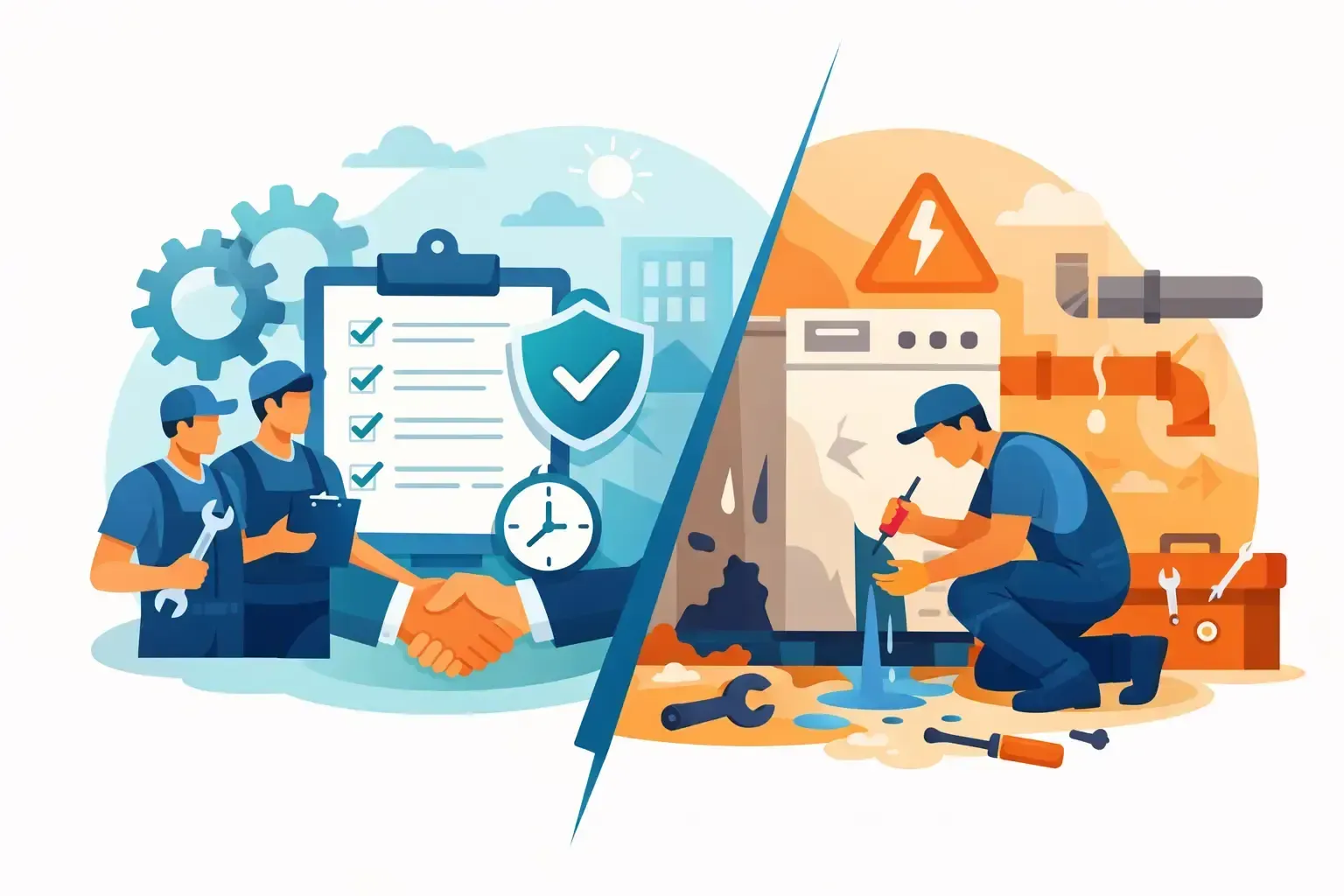
A failed furnace during a cold Idaho night, a sprinkler issue before a tenant moves in, or a breaker that keeps tripping can force a quick decision: should you sign up for ongoing service or pay for the repair in front of you? The service contract versus one time repair decision is less about finding one universally cheaper option and more about matching the level of care to the property, system, and risk involved.
For homeowners, landlords, and property managers, the right choice can reduce surprise breakdowns, protect equipment, and make it easier to budget. The wrong choice can mean paying for maintenance you do not need or waiting until a small problem becomes a costly emergency.
What a service contract is designed to do
A service contract is an ongoing agreement for defined maintenance, inspections, or priority service over a set period. The details matter. Some contracts focus on scheduled HVAC tune-ups, sprinkler winterization and startup, backflow testing, or recurring property maintenance. Others may include preferred scheduling, documented inspections, or reduced rates on certain repairs.
A good contract is not a blank check for every failure. It should clearly state what is included, what is excluded, how often visits occur, and how repair pricing is handled. Parts, major replacements, code upgrades, and work outside the agreed scope are often billed separately. That is not a drawback when it is explained upfront. Clear boundaries are part of honest service.
The main value is prevention and organization. Regular attention makes it more likely that loose electrical connections, worn HVAC components, leaking sprinkler valves, or small property issues are identified before they interrupt daily life or damage the home.
When one time repair makes more sense
A one time repair is exactly what it sounds like: a technician diagnoses a specific problem, provides a quote, and completes the approved work. It is often the best fit when the issue is isolated and the property does not need frequent professional attention.
For example, a homeowner may need a damaged outlet replaced, a leaking faucet repaired, or a single sprinkler head adjusted. A landlord may need a door repaired between tenants. If the home is newer, the systems have been well maintained, and there is no pattern of recurring concerns, paying only for needed work can be practical.
One time repair also gives you flexibility. You are not committing to scheduled visits or a recurring fee. That can be useful for owners who are comfortable tracking maintenance themselves and acting promptly when they notice a problem.
The trade-off is that repairs are usually reactive. By the time a system shows obvious symptoms, the underlying issue may have been developing for weeks or months. A repair call solves the immediate problem, but it may not provide the broader condition check that routine service can provide.
Service contract versus one time repair: compare the real costs
The monthly or annual price is only one part of the decision. A service contract creates a predictable maintenance expense, while one time repair keeps costs lower when nothing goes wrong. Neither model automatically saves money in every situation.
The better question is what an unexpected failure would cost your household or property operation. Consider the expense beyond the repair invoice: missed work, tenant disruption, possible water damage, loss of heat or cooling, emergency scheduling, and the time spent calling multiple contractors. For a property manager overseeing several homes, one preventable issue can consume far more time than the maintenance visit that may have caught it.
A contract tends to offer the strongest value when it covers systems that need regular seasonal care or when a property has several maintenance demands. HVAC equipment, irrigation systems, backflow assemblies, and rental homes with frequent turnover are common examples. A single repair may be more economical for a small, infrequent issue with little chance of causing secondary damage.
Do not choose based on a promised discount alone. Ask whether the contract schedules work that is genuinely useful for your property. A lower repair rate has limited value if the included maintenance does not address your equipment, occupancy pattern, or risk level.
Response time and accountability matter
When a system fails, the question is rarely just, “What will this cost?” It is also, “Who can help, and how soon?” Ongoing customers may receive easier scheduling or priority consideration, depending on the provider and the agreement. That can be valuable during busy seasonal periods, when many homeowners are calling about the same weather-related problem.
Still, priority service should be defined rather than assumed. Ask what it means in practice. Does it provide a faster callback, preferred appointment windows, or after-hours availability? Is emergency service included or simply offered at a separate rate? A dependable provider will answer directly instead of making vague promises.
Accountability also matters when several systems are involved. A multi-trade property service provider can keep a clearer record of past work and coordinate electrical, HVAC, handyman, and sprinkler-related needs. That does not mean every problem requires a contract. It does mean a recurring relationship can eliminate the hassle of explaining the property history to a new contractor every time something fails.
Consider the age and condition of the property
Older homes and aging equipment often benefit from a more proactive approach. Electrical systems may need closer attention if outlets are loose, breakers trip regularly, or additions were completed over time. Older HVAC equipment can develop wear that is easier to manage when found during planned service. Sprinkler systems can also become more vulnerable as valves, controllers, and buried components age.
A newer home is not automatically maintenance-free. It may simply have a lower immediate repair risk. If you own a newer primary residence and already stay on top of filters, seasonal irrigation tasks, and small repairs, one time service may be enough for many needs.
Rental properties are different because the owner is responsible for both the building and the tenant experience. A recurring service plan can help document maintenance, coordinate seasonal work, and address small issues before they become tenant complaints or vacancy delays. The appropriate level of coverage depends on the number of units, age of the homes, and how hands-on the owner wants to be.
Questions to ask before you agree to either option
Before choosing a contract, ask for the service scope in writing. You should know which visits are included, when they occur, whether diagnostic fees apply, how repairs are approved, and whether the agreement renews automatically. Also ask whether the provider is licensed and insured for the work being performed, particularly for electrical and backflow-related services where safety and compliance are central.
Before approving a one time repair, request a clear explanation of the diagnosis and quote. Ask whether the repair addresses the root cause or only the visible symptom. If an issue could return, it is reasonable to ask what maintenance or follow-up would reduce the chance of recurrence.
In both cases, transparency is the standard. You should understand the cost before work begins, know what the technician found, and receive a straightforward explanation of any recommended next steps. Pressure tactics are not a substitute for sound advice.
A practical way to decide
Choose a service contract when your property needs recurring seasonal care, has aging systems, supports tenants, or would be seriously disrupted by an unexpected failure. It is also a sensible choice if coordinating several vendors has become a burden and you value a single, accountable point of contact.
Choose one time repair when the issue is isolated, the property is in good condition, and you are willing to manage maintenance on your own schedule. You can always begin with a repair and move to recurring care later if the same systems keep causing trouble.
For Boise-area property owners, changing seasons make planned maintenance especially useful for heating, cooling, and irrigation. But the best arrangement is never based on fear or a sales pitch. It is based on an honest assessment of your property, your budget, and how much disruption you are prepared to manage. A qualified local professional should help you make that call clearly, then perform the work with the care your home deserves.