How to Troubleshoot Sprinkler Pressure Problems Fast
September 18, 2026
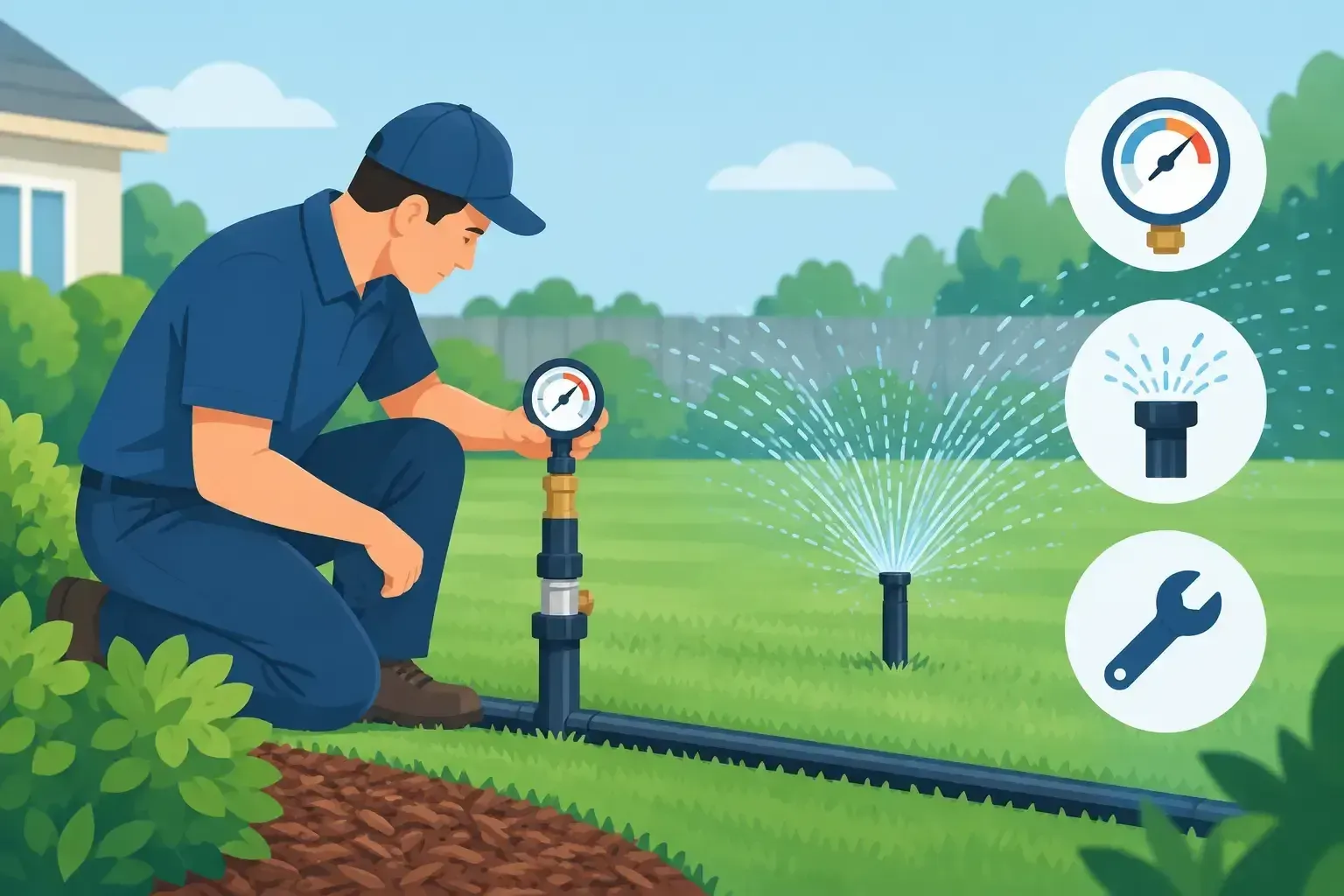
A sprinkler system can appear to be running normally while quietly wasting water, leaving dry strips in the lawn, or putting extra strain on valves and fittings. Knowing how to troubleshoot sprinkler pressure problems starts with one basic question: is the issue affecting every zone, or only one part of the system? That answer narrows the search quickly and helps prevent unnecessary digging or repairs.
Low pressure is not always a plumbing emergency. A clogged nozzle, partially closed valve, or damaged sprinkler head can create a localized problem. But widespread pressure loss can point to a leak, a backflow assembly issue, a failing valve, or a supply-side restriction that deserves professional attention.
Start by identifying the pressure pattern
Run one irrigation zone at a time and watch how the heads perform. A healthy zone should pop up fully, throw water in a consistent pattern, and avoid large puddles around the heads. Take note of whether the problem is isolated to one head, several heads in one zone, or every zone on the property.
If only one sprinkler head has weak flow, the cause is usually close to that head. Dirt in the nozzle, grass blocking the spray, a broken riser, or a cracked fitting are common culprits. If an entire zone has low pressure, focus on the zone valve, the supply line, or a leak downstream of the valve.
When every zone has weak pressure, the issue may be at the main shutoff, backflow assembly, pressure regulator, irrigation filter, or water supply. Avoid assuming the controller is at fault. A controller can tell a valve when to open, but it does not create water pressure.
Watch for signs of too much pressure, too
Pressure problems are not always about weak spray. Excessive pressure can create a fine mist that blows away in the wind instead of reaching the lawn. It can also cause heads to leak, seals to fail, and fittings to wear out faster.
A head that sprays a fog-like cloud or overshoots its intended area may have excessive pressure, the wrong nozzle, or a damaged internal seal. High pressure can be harder for a homeowner to diagnose safely because the correction may involve a pressure-regulating device or supply plumbing.
Check the simple causes before digging
A few basic checks solve many sprinkler pressure complaints. Turn the system off before handling sprinkler heads or opening any component that could release water.
First, look at the sprinkler heads themselves. Clear away grass, mulch, and soil around each head so it can rise and retract freely. A head that is buried or tilted may not deliver water where it should, even if pressure is adequate. Clean visible debris from the nozzle and confirm that the nozzle is matched to the head and zone design.
Next, inspect for damaged heads. A broken cap, cracked body, or missing nozzle can reduce pressure for the rest of a zone because water is escaping at the damaged location. If a head is leaking at the base only while running, its seal, riser, or fitting may need repair.
Then check the irrigation shutoff valves. A valve that was not fully reopened after winterization or prior service can restrict flow across the system. The irrigation main shutoff should be fully open during the watering season. If you have a separate valve feeding the backflow assembly, confirm that it is open as well.
Do not force a stuck valve handle. If it will not move easily, or if the valve begins leaking around the stem, stop and arrange service. A small problem can become a broken valve or flooded valve box quickly.
How to troubleshoot sprinkler pressure problems by zone
When pressure is poor in only one zone, run that zone long enough to inspect the full area. Walk the line and listen closely. Hissing, bubbling soil, pooling water, or an unusually green patch often indicates a broken pipe or fitting underground.
A leak is not always obvious at the surface. In Boise-area soils, water may travel along a trench before it becomes visible. You may see weak spray near the start of a zone and no obvious wet spot at all. If a zone has suddenly lost pressure after landscaping work, fence installation, aeration, or ground settling, a cut or cracked line becomes more likely.
Open the valve box for the affected zone and inspect for standing water, broken wires, or a valve that does not appear to open fully. A valve can fail mechanically, even when the controller is sending the correct signal. If the valve is buzzing, leaking, or only partially opening, it may need a diaphragm, solenoid, or full valve repair.
Some systems include a filter at a valve, drip zone, or sprinkler head connection. A clogged filter can sharply reduce flow. Clean only filters you can access safely and reinstall them correctly. If sediment keeps returning, the system may need a broader inspection rather than repeated cleaning.
Check supply-side components when every zone is weak
If all zones show low pressure, begin at the irrigation supply. Confirm that the main irrigation shutoff is fully open and that no visible pipe or fitting is leaking. Then inspect the backflow assembly area for dripping, frost damage, or shutoff handles left partly closed.
Backflow assemblies protect the drinking-water supply from contamination. They are not a place for trial-and-error adjustments. Opening test ports, changing internal settings, or bypassing the device can create a safety and code concern. If the assembly leaks, has visible damage, or seems to be restricting water after startup, contact a qualified backflow professional.
A pressure regulator can also reduce system performance if it is failing, incorrectly adjusted, or undersized for the irrigation demand. However, pressure regulation is often necessary to protect household plumbing and irrigation components. Raising pressure without confirming the system design can trade dry spots for leaks and damaged equipment.
Water demand outside the sprinkler system matters as well. Running irrigation while showers, washing machines, or hose bibs are in use may reduce available flow, especially on a property with a smaller service line. Try testing the system when indoor and outdoor water use is low. If pressure improves, scheduling zones at a different time may help, although it will not fix a true restriction or leak.
Separate pressure problems from coverage problems
Poor lawn coverage is sometimes blamed on pressure when the real issue is head layout or nozzle selection. Sprinkler heads need proper spacing and adjustment so their spray patterns overlap. A head aimed at a fence, driveway, or shrub bed can leave the lawn dry even with normal pressure.
Compare the affected heads with others in the same zone. Heads with different nozzles can apply water at different rates, creating dry areas and overwatered areas at the same time. Drip irrigation has its own requirements: a damaged pressure reducer, clogged emitter, or missing filter can make a drip zone look like it has a general pressure issue.
If you recently replaced heads or changed landscaping, make sure the new components are compatible with the existing zone. Mixing high-flow rotors, spray heads, and mismatched nozzles on one zone can exceed available flow and reduce performance across the entire area.
Know when it is time to call for repair
Homeowners can often clear a nozzle, replace a visibly broken sprinkler head, and verify that accessible shutoffs are open. Stop troubleshooting and request service when you find an underground leak, repeated valve failure, a damaged backflow assembly, widespread low pressure, or pressure that is clearly too high.
It is also worth calling for help if the system was winterized and does not perform correctly after spring startup. Idaho freeze-thaw cycles can damage exposed components and fittings, and small cracks may only reveal themselves once the system is pressurized. A professional can isolate zones, test operating pressure and flow, inspect valves, and identify whether the problem is in the irrigation layout, supply plumbing, or backflow equipment.
For homeowners and property managers who want one accountable point of contact, M Property Services can help diagnose sprinkler and backflow concerns with a practical, code-conscious approach. The right repair is not always the biggest repair. Sometimes it is a nozzle or valve adjustment; other times, finding the hidden leak early protects the lawn, the water bill, and the rest of the system.
A sprinkler system should water evenly without creating puddles, mist, or mystery dry spots. When something changes, document which zones are affected and what you see before service arrives. Those details can turn a frustrating irrigation issue into a faster, more precise repair.