Heat Pump Versus Furnace Repair: Which Pays Off?
September 16, 2026
A cold Boise morning makes a heating problem feel urgent fast. When your system starts blowing cool air, short cycling, making new noises, or driving up the utility bill, the question is not just how quickly it can be fixed. Heat pump versus furnace repair is also a decision about the age of your equipment, the type of failure, your home’s comfort needs, and whether the repair is likely to hold through another Idaho winter.
A good answer is rarely as simple as “heat pumps are better” or “furnaces last longer.” Both systems can be dependable when they are properly sized, maintained, and repaired by a qualified technician. The practical goal is to restore safe, efficient heat without spending money on a short-term fix that creates another emergency a few months later.
Heat Pump Versus Furnace Repair: The Core Difference
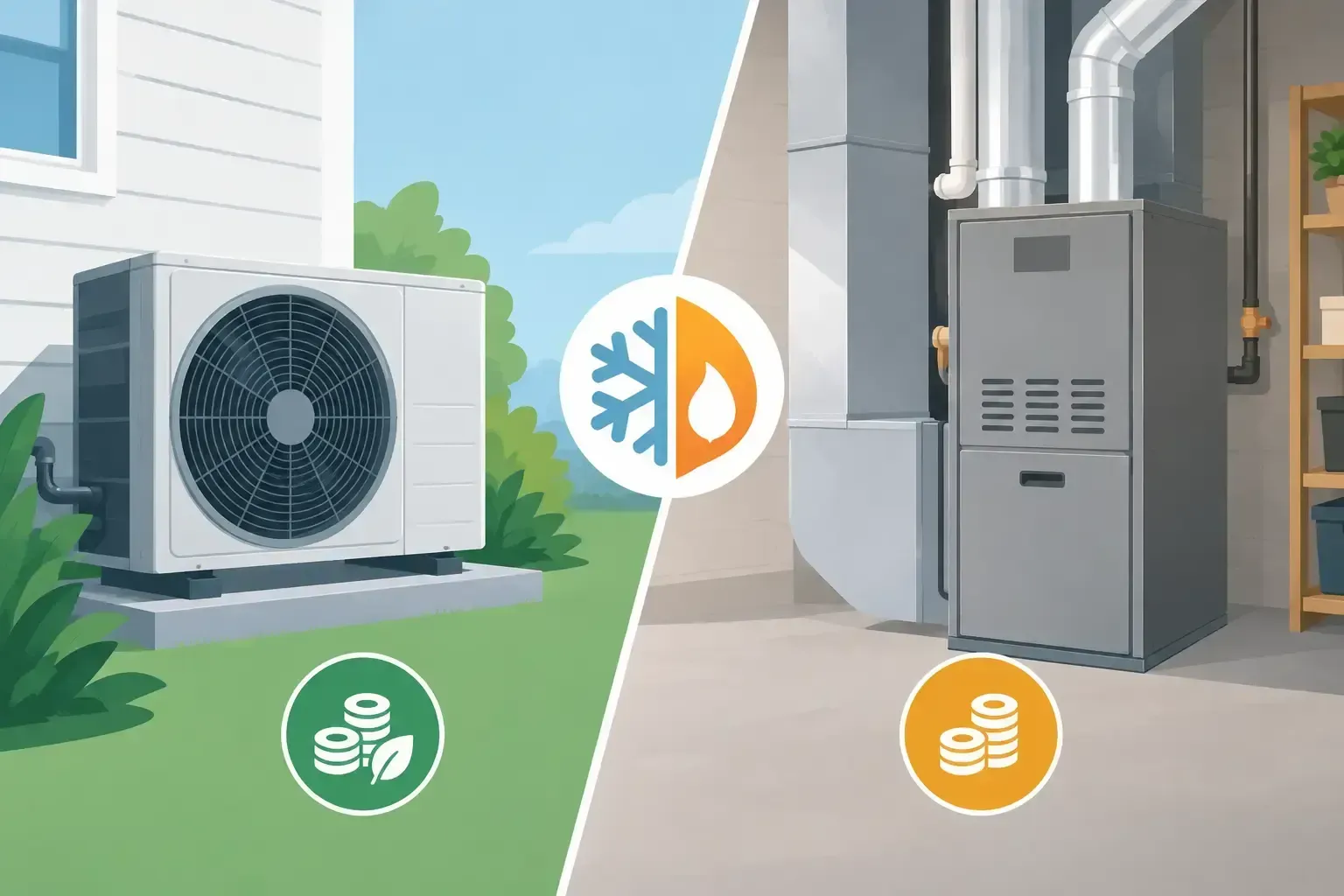
A furnace creates heat, usually by burning natural gas or using electric resistance elements, then sends that heat through your ductwork. A heat pump moves heat rather than creating it. In heating mode, it collects available heat from outside air and transfers it indoors. In summer, it reverses direction to provide air conditioning.
That difference changes the repair conversation. Furnace repairs often involve combustion, ignition, fuel delivery, venting, or airflow. Heat pump repairs may involve refrigerant, electrical controls, defrost operation, the outdoor unit, or the reversing valve that switches between heating and cooling.
Neither system is automatically more expensive to repair. A straightforward furnace igniter replacement may be less involved than a heat pump refrigerant leak. On the other hand, a failed furnace heat exchanger is a serious and potentially costly issue, while a heat pump capacitor or contactor may be a relatively routine repair. The failed component matters more than the equipment label.
When a Furnace Repair Is the Sensible Choice
Furnaces remain common in the Boise area because they provide strong, immediate heat during cold weather. If your furnace is under 12 years old, has been maintained regularly, and has a repairable issue, repair is often the sensible route.
Common repairable furnace issues include a dirty flame sensor, worn igniter, malfunctioning thermostat, failed blower capacitor, clogged condensate drain on a high-efficiency unit, or a control-board problem. These repairs can restore performance without requiring a system replacement.
Safety should always come first with a gas furnace. Delayed ignition, a yellow or flickering burner flame, soot near the unit, unusual gas odors, or a carbon monoxide alarm require prompt professional attention. Do not keep resetting the furnace in hopes that it will start behaving normally. A furnace that is cycling off because of a safety control is communicating that something needs to be checked.
A repair becomes harder to justify when the furnace has a cracked heat exchanger, repeated major component failures, extensive corrosion, or poor efficiency combined with rising repair costs. A heat exchanger problem is not a cosmetic concern. It can affect safe combustion and requires a clear, professional recommendation based on the condition of the equipment.
Furnace age and repair history matter
Many well-maintained furnaces can operate for 15 to 20 years, sometimes longer. But age alone should not decide the outcome. A 16-year-old furnace needing its first modest repair is a different situation from a 12-year-old furnace that has needed a blower motor, control board, and ignition repairs in two seasons.
Look at the pattern. If the system is reliable, parts are available, and the repair resolves a specific problem, repairing may protect your budget. If each service visit reveals another aging component, it may be time to plan rather than wait for a midwinter breakdown.
When Heat Pump Repair Makes Sense
A heat pump provides both heating and cooling, so keeping it healthy protects year-round comfort. In moderate weather, heat pumps can be highly efficient because they transfer heat instead of generating it through combustion. During colder stretches, many homes rely on auxiliary or backup heat to support the system.
Routine heat pump repairs can include replacing a capacitor, contactor, thermostat, fan motor, sensor, or defrost control. Electrical connections and outdoor-unit components also need attention over time, particularly after seasons of temperature swings and exposure to weather.
Do not assume a heat pump is failing just because it enters defrost mode. In cold, damp conditions, frost can form on the outdoor coil. The system periodically changes operation to clear that frost, and you may see steam rising from the unit. That can be normal. Thick ice that does not clear, frequent defrost cycles, reduced heat indoors, or unusual grinding and buzzing are not normal and should be inspected.
Refrigerant issues deserve a more careful evaluation. Refrigerant does not get “used up” in a sealed system. If the charge is low, there may be a leak. Simply adding refrigerant without identifying the cause can lead to repeat service calls and reduced performance. The right repair depends on where the leak is, the age and condition of the system, and whether the refrigerant type and replacement parts remain practical.
A heat pump may need a performance check, not just a repair
Heat pump comfort problems are sometimes caused by airflow, thermostat settings, duct leakage, or an auxiliary heat issue rather than a failed compressor. A technician should evaluate the full operating picture: indoor and outdoor temperatures, electrical readings, refrigerant performance where appropriate, filter condition, airflow, and defrost operation.
That diagnostic approach matters because heat pumps are more than outdoor air conditioners running backward. A part can be working well enough to avoid a complete shutdown while still causing high energy use and uneven comfort.
Compare the Repair Decision, Not Just the Equipment
For homeowners and property managers, the best choice usually comes down to four practical questions: Is the system safe? Is the repair likely to last? How much useful life remains? What will it cost if you postpone a larger decision?
A useful rule of thumb is to compare the repair cost with the condition and age of the system. A modest repair on equipment with several reliable years left is usually reasonable. A major repair on a system near the end of its expected service life deserves a more detailed conversation about replacement options.
Efficiency also belongs in the decision, but it should not be oversold. Replacing equipment can lower operating costs, especially when an older system is inefficient or poorly performing. Still, utility savings alone may not immediately offset every replacement cost. The stronger case for replacement is often a combination of efficiency, reliability, safety, comfort, warranty coverage, and avoiding repeated emergency repairs.
For rental properties, predictability has real value. A repair that gets a tenant safely through the season may be the right immediate decision, while a planned replacement during a vacancy or mild-weather window can reduce disruption later. That is different from making a rushed replacement decision on the coldest day of the year.
Warning Signs You Should Not Ignore
Whether you have a heat pump or furnace, a few symptoms call for timely service rather than watchful waiting:
- The system starts and stops repeatedly without properly heating the home.
- Airflow is weak, rooms are unevenly heated, or the filter becomes dirty unusually fast.
- Energy bills rise sharply without a comparable change in weather or household use.
- You hear banging, screeching, grinding, or persistent electrical buzzing.
- A furnace produces gas odors, soot, or triggers a carbon monoxide alarm.
- A heat pump is covered in ice, runs constantly, or cannot keep up with normal heating demand.
Some of these issues are relatively simple to correct. Others point to safety controls, electrical faults, airflow restrictions, or major component wear. The only responsible approach is diagnosis before recommending a repair or replacement.
How Regular Maintenance Changes the Equation
aintenance will not make a system last forever, but it can prevent many avoidable failures. Clean filters, clear outdoor heat pump units, secure electrical connections, proper drainage, clean coils, and verified safety controls all affect performance.
For furnaces, annual service can help identify burner, ignition, venting, and airflow concerns before heating season. For heat pumps, seasonal maintenance is especially valuable because the same equipment works through both summer cooling and winter heating demands.
M Property Services helps Boise-area homeowners and property managers make these decisions with straightforward diagnostics and practical recommendations. The priority should be clear: understand what failed, what the repair addresses, what it costs upfront, and what condition the rest of the system is in.
The right heating decision is not always replacement and it is not always repair. A trustworthy technician should be able to explain both paths plainly, give you the safety information you need, and help you choose a solution that protects your property well beyond the next cold night.