Last Updated: October 25, 2026
Quick Summary
A property maintenance contract is necessary when your home has systems needing regular attention, you've paid for an emergency repair recently, or you want documented maintenance history for resale. It rarely pays off when your home is new, your budget is tight, or you prefer handling repairs yourself.
- A contract pays off when routine maintenance catches problems while they're still cheap to fix.
- A home maintenance contract template should spell out scope, visit frequency, response times, exclusions, and termination terms.
- Shorter contract terms cost more per visit but keep you flexible; longer terms lower the per-visit rate but lock you in.
- Ask any property maintenance company whether they are licensed and insured, and verify license numbers in writing.
- Three or more yes answers on the decision checklist usually means a contract is worth exploring.
Table of Contents
- When a Property Maintenance Contract Is Worth It and When It Isn't
- The Benefits of a Property Maintenance Contract for Homeowners
- Risks of Skipping a Property Maintenance Agreement
- What Belongs in a Home Maintenance Contract Template
- How Property Maintenance Contract Length Affects Your Options
- Questions to Ask a Property Maintenance Company Before You Sign
- Your Checklist for Deciding if a Contract Fits Your Home
- Get a Quote and Compare It to Your Own Maintenance Reality
- Frequently Asked Questions
When a Property Maintenance Contract Is Worth It and When It Isn't
A property maintenance contract is a written agreement where a service provider handles scheduled upkeep and repairs on your home for a set term. At M Property Services, we've spent more than 30 years helping Treasure Valley homeowners decide whether that arrangement fits their situation. The honest answer: sometimes it does, and sometimes it doesn't.
Here's the short version. A contract pays off when your home has systems that need regular attention, when you're tired of chasing down separate tradespeople, or when you'd rather catch small problems before they become expensive ones. It rarely pays off when your home is new, your budget is tight, or you genuinely enjoy handling repairs yourself.
Most homeowners ask "is a property maintenance contract necessary" after a surprise repair bill. That's the right question to ask, and the wrong moment to ask it. Below, we'll show you exactly how to weigh the decision before the next emergency forces it.
The Benefits of a Property Maintenance Contract for Homeowners
The biggest benefit isn't convenience. It's that routine maintenance catches problems while they're still cheap to fix.
Consider your HVAC system. A unit that gets checked and serviced on schedule tends to last longer than one that only gets attention after it stops working. That single difference often outweighs the cost of the contract itself.
A few other benefits homeowners tell us matter most:
- One point of contact. No more juggling three phone numbers for electrical, HVAC, and general repairs.
- Fewer surprises. Scheduled visits mean small issues get flagged early.
- Documented history. A written record of what was serviced and when helps at resale.
- Accountability. A contract spells out what's covered, so expectations are clear on both sides.
If you want to see the full range of work a contract can cover, our home maintenance services page lays out what we handle across electrical, HVAC, handyman, and backflow work.
Risks of Skipping a Property Maintenance Agreement
The risks of going without a property maintenance agreement are mostly invisible until they aren't. Deferred maintenance rarely announces itself. It accumulates.
Here's what tends to happen. A small leak stays small for a season or two. A filter goes unchanged. A breaker gets tripped and reset instead of inspected. None of these feel urgent. Then one day the repair bill arrives and it's three times what the original fix would have cost.
A common mistake is assuming that if nothing is broken, nothing needs attention. That's not how home systems work. They degrade quietly.
There's also the coordination problem. Hiring separate contractors for each trade often costs more in total than bundling the work, and it's harder to hold anyone accountable when a problem crosses trades. If you're weighing that trade-off, this comparison of hiring one handyman versus multiple contractors breaks down the cost and time differences.
Watch out: skipping maintenance on code-regulated systems like backflow assemblies can create compliance problems, not just repair bills. Those are usually more expensive to resolve than the maintenance would have been.
What Belongs in a Home Maintenance Contract Template
A home maintenance contract template should spell out five things: scope of work, visit frequency, response times, exclusions, and how either side can end the agreement. If a template is missing any of those, don't sign it.
Here's what to check line by line:
| Contract Element | What It Should Say | Why It Matters |
|---|---|---|
| Scope of work | Exact systems and tasks covered | Prevents "that's not included" disputes |
| Visit frequency | How often routine visits happen | Sets your maintenance rhythm |
| Response time | Window for urgent repair calls | Tells you what "emergency" means |
| Exclusions | What costs extra | Avoids surprise line items |
| Termination | Notice period and exit terms | Protects you if service slips |
A good template also names the trades covered and confirms licensing. Ours, for example, lists our backflow assembly tester license and electrical installer credentials directly on the agreement.
The thing nobody tells you about templates: the exclusions section is where the real value lives. Read it twice.
How Property Maintenance Contract Length Affects Your Options
Property maintenance contract length usually runs month to month, annually, or multi-year. Shorter terms cost more per visit but keep you flexible. Longer terms lower the per-visit rate but lock you in.
Which one fits depends on how settled you are. Planning to stay in your home for years? An annual agreement usually makes sense. Thinking about selling within a year? Month to month keeps your options open.
Ask three questions before you commit to a term:
- How much notice do I need to cancel?
- Does the rate change at renewal?
- What happens if I sell the home mid-term?
A contract that can't answer those clearly is a contract you should read again.
Questions to Ask a Property Maintenance Company Before You Sign
Ask any property maintenance company these questions before signing: Are you licensed and insured? What's your response time for urgent calls? What's excluded? How do I cancel? Can I see the agreement before committing?
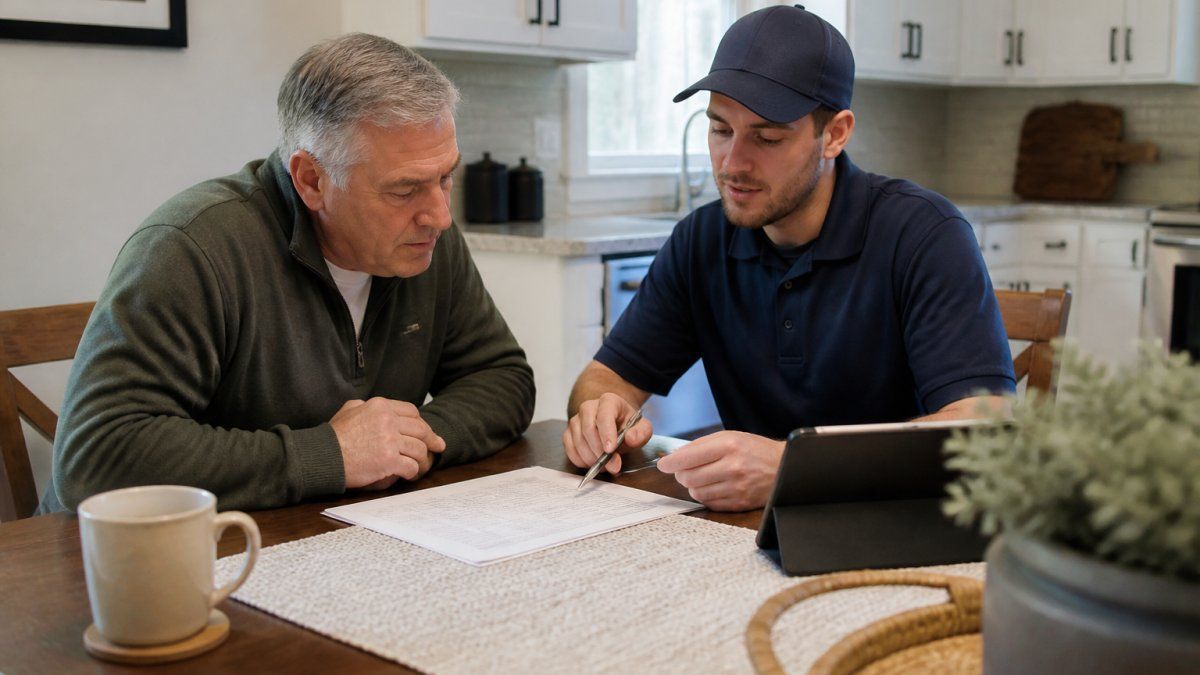
The licensing question matters most, and it's the easiest to verify. Ask for the license numbers in writing, then check them against the issuing body. A legitimate company will hand them over without hesitation.
Also ask whether they take on small jobs. Some companies only want big projects. If you have one or two minor issues, you want to know that upfront.
If you'd rather get quick answers before picking up the phone, our Treasure Valley homeowner FAQ covers common questions on backflow testing, HVAC, electrical, and handyman work.
Your Checklist for Deciding if a Contract Fits Your Home
Work through this checklist honestly. Three or more "yes" answers usually means a contract is worth exploring.
- My home is more than 10 years old
- I have HVAC, electrical, or plumbing systems I don't inspect myself
- I've paid for an emergency repair in the last two years
- I don't have a reliable go-to person for each trade
- I want documented maintenance history for resale
- I'd rather prevent problems than react to them
If you checked fewer than three, a pay-as-you-go arrangement is probably the better fit. That's a legitimate choice, not a failure. Many homeowners do fine calling for help only when something breaks.
Want to see what a year of upkeep actually looks like task by task? Our winter home maintenance checklist shows the seasonal work a contract would typically cover.
Get a Quote and Compare It to Your Own Maintenance Reality
The only way to answer "is a property maintenance contract necessary" for your home is to compare a real quote against what you actually spend now. Add up last year's repair bills and the hours you spent coordinating them. Then get a quote and put the two side by side.
We won't pretend the math always favors a contract. Sometimes it doesn't, and we'll tell you so.
If you're ready to see the numbers, contact our team to request a quote and talk through what your home actually needs. We'll walk you through the scope, the exclusions, and the term options so you can decide with clear information.
Frequently Asked Questions
Is a property maintenance contract necessary for homeowners?
It depends on your home, your schedule, and how much upkeep you can realistically handle. A contract makes sense if you own older systems, travel often, or want predictable service instead of scrambling when something breaks. It is less necessary for newer homes with few moving parts and a homeowner who enjoys doing the work. The honest test: list every maintenance task your home needs in a year. If you cannot name who handles each one, a property maintenance contract is worth pricing out.
What should a property maintenance contract include?
Look for a written scope that names every system covered, the number of visits per year, what counts as an emergency versus a scheduled call, response-time expectations, and how parts and labor are billed. It should also state the property maintenance contract length, the cancellation terms, and whether the agreement renews automatically. Ask for proof of licensing, bonding, and insurance in writing. If a term is vague, ask for it in plain language before signing anything.
Can I cancel a property maintenance contract?
Cancellation rules vary by provider and by the contract itself. Some agreements let you cancel with 30 days' notice, while others lock you in for the full term or charge a fee for early exit. Before you sign, ask two questions: how do I cancel, and what do I owe if I do? Get the answer in writing. A fair agreement gives you a clear exit, and a provider confident in its work will not hide that clause.
Does a maintenance contract cover emergency repairs?
Most agreements separate scheduled maintenance from emergency calls, and the coverage differs. Some include a set number of after-hours visits, others charge a premium rate for emergencies, and some exclude them entirely. Read the emergency clause closely and ask what response time you can expect on a weekend or holiday. If your home has aging HVAC or electrical systems, emergency coverage is often the detail that decides whether the contract pays for itself.
Deciding whether a maintenance contract is worth it shouldn't feel like a sales pitch. At M Property Services, we've built our business on licensed, bonded, and insured work across multiple trades, with one team handling handyman, electrical, HVAC, and backflow needs. That means fewer calls, clearer accountability, and a written record of what's been done. Get started with M Property Services and get a maintenance plan built around your home, not a generic package.