That diagnostic approach matters because heat pumps are more than outdoor air conditioners running backward. A part can be working well enough to avoid a complete shutdown while still causing high energy use and uneven comfort.
If your irrigation system is due for testing, treat the appointment as a practical part of spring property care. A properly tested assembly gives you one less thing to worry about when it is time to turn the water on and enjoy the season.
Heating Cooling Maintenance That Prevents Breakdowns
August 7, 2026
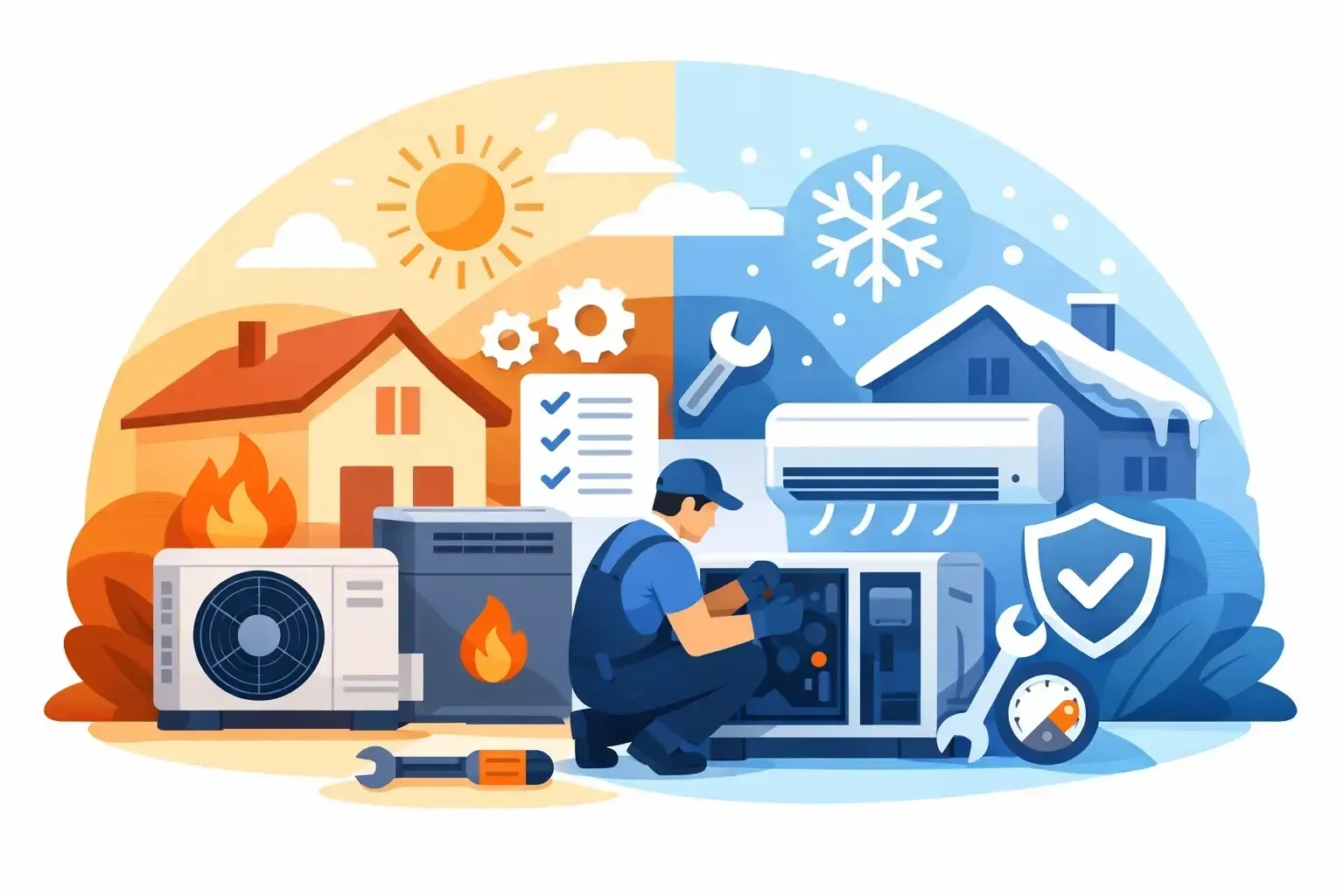
A furnace that quits during a Boise cold snap or an air conditioner that struggles through a July afternoon rarely fails without warning. Heating cooling maintenance gives homeowners a chance to catch those warnings early, when the fix is usually simpler, less disruptive, and less expensive than an emergency repair.
For homeowners, landlords, and property managers, HVAC maintenance is not about chasing perfection. It is about keeping the system safe, efficient, and dependable while extending the useful life of equipment that costs real money to replace. The right plan also helps avoid the common frustration of discovering a problem only after comfort has already been lost.
What Heating Cooling Maintenance Actually Covers
Heating and cooling systems do much more than move warm or cold air. They rely on electrical connections, safety controls, motors, filters, drainage components, refrigerant systems, ductwork, and thermostats working together. A small issue in one area can put extra strain on the rest of the system.
Professional maintenance is a planned inspection and tune-up of the equipment before heavy seasonal use. For a furnace, that often means checking ignition components, burners, safety controls, airflow, electrical connections, and the condition of the filter. For an air conditioner or heat pump, the work commonly includes inspecting the outdoor unit, checking electrical components, clearing the condensate drain, verifying airflow, and looking for signs of wear or refrigerant-related concerns.
The exact checklist depends on the equipment. A newer heat pump, an older gas furnace, and a rental property with multiple units do not have the same needs. That is why a useful maintenance visit should be based on the system in front of the technician, not a rushed one-size-fits-all checklist.
Why Small Problems Become Expensive Repairs
Most HVAC failures begin as ordinary maintenance issues. A clogged filter restricts airflow. Restricted airflow can make a blower motor work harder, reduce comfort, and contribute to overheating or coil problems. A blocked condensate drain can lead to water damage or a system shutdown. A loose electrical connection can create intermittent operation, component damage, or a safety concern.
These problems are not always obvious from inside the home. The system may still turn on, but it may run longer, make new noises, cycle on and off too frequently, or leave some rooms less comfortable than others. Higher utility bills can also be an early signal, especially when household habits have not changed.
Maintenance cannot guarantee that a part will never fail. Electronics, motors, and compressors can still wear out unexpectedly. It does, however, make it more likely that developing issues will be found before they turn into after-hours calls, tenant complaints, or a full system shutdown.
A Seasonal Schedule That Works in Southwest Idaho
In the Boise area, heating and cooling equipment has to handle distinct seasons, dry summer heat, winter cold, wind, dust, and rapid temperature changes. A simple twice-yearly schedule works well for many homes: service the cooling system in spring and the heating system in fall.
Spring service prepares the air conditioner or heat pump before it is needed every day. It is a good time to address dirty outdoor coils, weak capacitors, drainage issues, damaged wiring, or airflow concerns. Waiting until the first hot week can mean competing with many other homeowners for repair availability.
Fall service prepares the furnace before overnight temperatures drop. For gas equipment, the inspection should pay close attention to combustion-related components and safety controls. If a furnace has been sitting unused for months, it is better to identify an issue during a planned visit than on the first cold night of the year.
For rental owners and property managers, scheduled maintenance has another advantage: it creates a documented service history. That record helps track recurring issues, plan for aging equipment, and demonstrate that the property has been cared for responsibly.
What Homeowners Can Do Between Service Visits
A professional inspection handles the technical work, but a few homeowner habits make a meaningful difference throughout the year. Start with the air filter. Check it regularly and replace it based on its condition, the manufacturer’s guidance, pets in the home, renovation dust, and how often the system runs. A filter does not need to look completely black to be restricting airflow.
Keep supply vents and return grilles clear of furniture, rugs, storage boxes, and curtains. Closing off multiple vents to force air into one room can create airflow problems rather than solve them. If one part of the house is consistently uncomfortable, the answer may involve duct design, insulation, thermostat placement, or equipment capacity - not just a vent adjustment.
Outside, keep leaves, grass clippings, and stored items away from the outdoor HVAC unit. The unit needs room to move air. Avoid spraying it with a pressure washer or trying to disassemble panels without training. Bent coil fins, damaged wiring, and electrical hazards are easy to create accidentally.
Finally, pay attention to changes. A burning smell that does not fade quickly, repeated breaker trips, water around indoor equipment, loud grinding, a gas odor, or a carbon monoxide alarm requires prompt action. Turn the system off when appropriate and contact a qualified professional. Do not keep resetting breakers or bypassing safety controls to get through the day.
Warning Signs Worth Scheduling Soon
Some signs call for immediate attention, while others mean it is time to schedule service before the problem grows. The most common concerns include uneven temperatures, weak airflow, frequent cycling, unusual noises, persistent musty odors, and utility costs that rise without a clear reason.
A system that runs constantly is not automatically failing. During extreme weather, longer run times may be normal. But if it cannot reach the thermostat setting, runs continuously in mild weather, or starts and stops every few minutes, it needs evaluation. The same is true when the thermostat seems inaccurate or the system only works after repeated adjustments.
Age matters, but it is not the only factor in the repair-versus-replace decision. A well-maintained older unit may continue to serve a home reliably, while a newer system with poor installation, neglected filters, or unresolved airflow issues may develop problems early. A trustworthy recommendation should consider repair cost, equipment condition, efficiency, safety, expected remaining life, and the homeowner’s plans for the property.
Heating Cooling Maintenance Is Also a Safety Issue
Comfort is the obvious benefit, but safety deserves equal attention. Furnaces and HVAC equipment involve electricity, moving parts, and, in some homes, natural gas and combustion gases. Maintenance helps identify worn wiring, failed safety switches, venting concerns, and other conditions that should not be ignored.
Homeowners should have working carbon monoxide alarms in appropriate locations, especially where fuel-burning appliances are present. These alarms are a backup, not a replacement for proper furnace maintenance. If a carbon monoxide alarm sounds or you suspect a gas leak, leave the area and follow emergency guidance from your utility provider or local emergency services.
For property managers, planned inspections also reduce the risk of avoidable disruptions. Coordinating HVAC, electrical, handyman, and seasonal property needs through a dependable local provider can simplify maintenance scheduling and accountability. M Property Services helps Boise-area property owners address those needs with practical, code-conscious service.
Make Maintenance Part of Property Care
The best time to think about your HVAC system is before it becomes urgent. Put seasonal service on the calendar, replace filters before they become a problem, and respond early when performance changes. Those simple habits protect comfort, reduce surprises, and give you more control over the cost of caring for your property.
A well-maintained system may never be the most noticeable part of a home - and that is exactly the point. It should quietly do its job when your family, tenants, or property need it most.