That diagnostic approach matters because heat pumps are more than outdoor air conditioners running backward. A part can be working well enough to avoid a complete shutdown while still causing high energy use and uneven comfort.
If your irrigation system is due for testing, treat the appointment as a practical part of spring property care. A properly tested assembly gives you one less thing to worry about when it is time to turn the water on and enjoy the season.
Electrical Troubleshooting for Homeowners
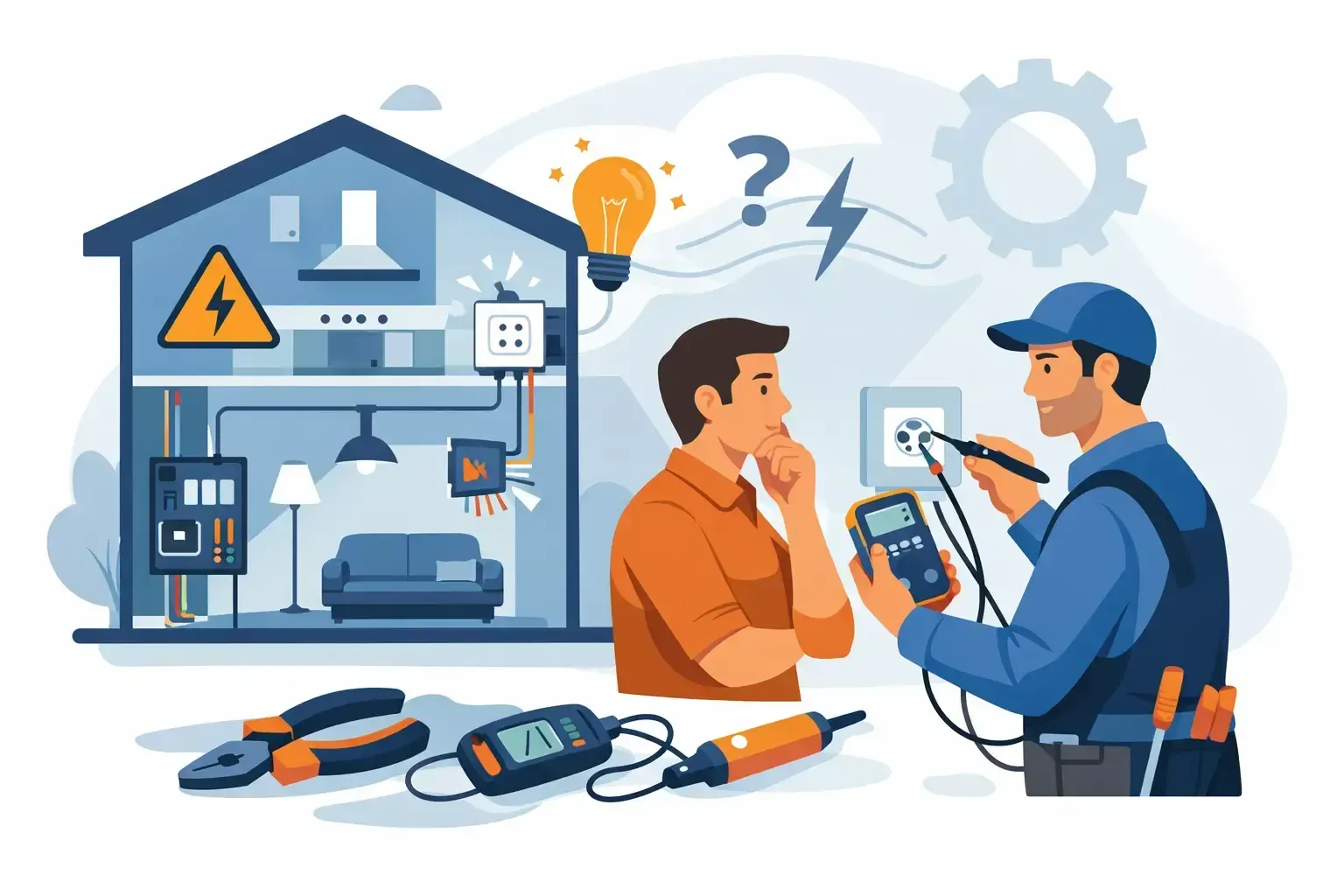
A bedroom outlet stops working just as a phone charger, lamp, and alarm clock are plugged into it. A kitchen breaker trips while the microwave is running. These are the moments when electrical troubleshooting for homeowners can prevent unnecessary worry - provided the troubleshooting stays within safe limits.
The goal is not to turn a homeowner into an electrician. It is to identify the obvious, low-risk causes, protect the people in the home, and recognize when a licensed professional needs to investigate. Electricity can cause shock, burns, and fire with very little warning. A careful first look is useful. Opening panels, removing outlet covers, or working around damaged wiring is not.
Start Electrical Troubleshooting With the Safest Checks
Before assuming there is a wiring problem, rule out the equipment plugged into the circuit. Unplug the device and try it in a known working outlet. A failed appliance, worn power cord, or overloaded power strip can look like a household electrical issue when it is not.
If a single outlet has stopped working, check whether it is controlled by a wall switch. It is common for one half of an outlet, or an outlet in an adjacent room, to be switched. Then look for a tripped GFCI outlet. These outlets have "Test" and "Reset" buttons and are commonly installed in kitchens, bathrooms, garages, laundry areas, crawl spaces, and exterior locations. One tripped GFCI can interrupt power to several downstream outlets.
Press the Reset button firmly. If it will not reset, or it resets and trips again, leave it alone and arrange service. A GFCI that will not hold may be detecting a real fault, moisture exposure, a damaged appliance, or a wiring issue.
Next, check the electrical panel without removing its cover. Look for a breaker that is sitting between ON and OFF or is clearly in the OFF position. To reset it, first move it fully to OFF, then back to ON. Do this once after unplugging devices on that circuit. If the breaker trips again, do not keep resetting it. Repeated tripping is a warning that the circuit is overloaded or that something needs professional diagnosis.
What a Tripped Breaker Is Telling You
Breakers are safety devices, not inconveniences. They shut off power when they sense more current than the circuit can safely handle, and modern breakers may also trip when they detect conditions associated with arcing or ground faults.
An overload is often the simplest explanation. Space heaters, hair dryers, portable air conditioners, toaster ovens, microwaves, and power tools can draw substantial power. In older homes especially, several rooms may share one circuit. Running multiple high-demand items at the same time can push it past its limit.
The practical fix may be as simple as moving one appliance to a different circuit and avoiding extension cords for permanent use. But it depends on the pattern. If the breaker trips only when a specific appliance runs, the appliance or its cord may be the problem. If it trips with very little plugged in, after rain, or at random times, the cause may be more serious.
A breaker that feels hot, makes buzzing sounds, will not reset, or trips repeatedly needs prompt attention. Never replace a breaker with a larger one just to stop tripping. Circuit wiring, outlets, and connections are designed for a specific capacity. Increasing breaker size without verifying the wiring can create a fire hazard.
When an Outlet Problem Is More Than an Outlet Problem
A dead outlet can be isolated, but several dead outlets or lights often point to a shared circuit, a tripped protective device, or a loose connection somewhere upstream. Loose connections create resistance and heat. They may work intermittently before failing completely.
Watch for a pattern. Does power cut out when a light switch is used? Does one room lose power when an appliance in another room runs? Do lights dim when the furnace, garbage disposal, or refrigerator starts? These details help a qualified technician narrow the diagnosis quickly and can reduce time spent searching for the source.
Older homes in Boise and surrounding communities may also have additions, remodels, or owner-installed changes that complicate what appears to be a simple outlet issue. The visible outlet is not always where the problem begins. A licensed electrician can evaluate the circuit, connections, grounding, protection requirements, and panel capacity rather than treating only the symptom.
Electrical Warning Signs That Should Not Wait
Some issues call for a service appointment soon. Others require immediate action. Stop using the affected circuit and seek professional help if you notice any of the following:
- A burning odor, smoke, sparks, or scorch marks near an outlet, switch, panel, or appliance.
- A buzzing, crackling, or popping sound from electrical equipment.
- An outlet or switch plate that is warm, discolored, loose, or damaged.
- Flickering or dimming lights that are frequent, widespread, or tied to normal appliance use.
- A shock or tingling sensation when touching an appliance, fixture, or metal surface.
If there is smoke, active sparking, or a suspected electrical fire, get everyone out of the home and call 911. Do not use water on an electrical fire. If it is safe to do so and you know the correct main disconnect, shutting off power may reduce the hazard, but personal safety comes first.
What Homeowners Can Check and What to Leave Alone
There is a useful line between observation and repair. Homeowners can safely confirm whether a device works elsewhere, reset a GFCI or breaker once, check for a switched outlet, and note exactly when the problem occurs. These basic checks provide helpful information without exposing anyone to live parts.
Leave wiring repairs, panel work, breaker replacement, outlet replacement, and fixture installation to a licensed professional. The same applies to repeatedly tripping circuits, aluminum wiring concerns, service upgrades, moisture-damaged electrical equipment, and any issue involving a hot or burned component.
This is not just about avoiding inconvenience. Electrical work must be done correctly for the home’s safety, insurance considerations, and code compliance. A quick repair that hides a failed connection can lead to a more expensive problem later.
Make the Service Visit More Efficient
When you call for electrical service, share what you have already observed. Mention which rooms are affected, whether a breaker or GFCI trips, what was plugged in at the time, and whether the issue began after a storm, renovation, appliance installation, or seasonal change.
If possible, take a photo of the panel directory and make note of the breaker number involved. Do not remove the panel cover or attempt to trace wiring yourself. Clear information allows the technician to arrive prepared and focus on the right circuit sooner.
For landlords and property managers, it also helps to ask tenants not to keep resetting breakers or using damaged cords while waiting for service. A short report of the timing and symptoms is more useful than a guess about the repair.
Prevent Problems Before They Interrupt Your Day
Many electrical calls begin with conditions that developed gradually. Avoid overloading power strips, replace cracked cords, keep outdoor connections protected from moisture, and do not rely on extension cords as permanent wiring. Test GFCI outlets periodically using their built-in Test and Reset buttons, and make sure the electrical panel remains accessible.
If your home has frequent breaker trips, limited outlets, aging equipment, or plans for a remodel, electric vehicle charger, hot tub, or larger HVAC equipment, schedule an electrical evaluation before adding load. Planning ahead is generally safer and less disruptive than discovering a capacity problem after the installation.
When something does not look, sound, or smell right, trust that signal. A quick safe check can clarify the next step, but a licensed local professional should be the one to solve anything beyond it. M Property Services helps homeowners address electrical concerns with clear communication, code-conscious work, and the practical care a home deserves.