Last Updated: November 15, 2026
Quick Summary
When a backflow test fails, the device did not pass its check and may not be stopping water from flowing backward, so it needs prompt attention from a licensed tester or plumber. A failure is a warning rather than confirmed contamination. The usual fix is cleaning, repair, or replacement of the device, followed by a retest.
- Get a written test report listing the failed part and readings.
- Call a licensed backflow tester or plumber to schedule repair or retest soon.
- Watch for discolored water, unusual taste or smell, or pressure changes.
- Confirm repair deadlines and retest reporting rules with your water provider.
- Keep the test report and repair receipts as proof of compliance.
Table of Contents
- What a Failed Backflow Test Actually Means
- Is a Failed Backflow Test an Emergency?
- Common Causes of Backflow Test Failure
- What to Do If Backflow Test Fails
- Backflow Preventer Repair: Repair, Clean, or Replace
- Backflow Retest After Repair
- Booking Your Retest With M Property Services
- Frequently Asked Questions
What a Failed Backflow Test Actually Means
A backflow test checks whether the backflow preventer on your water line is working.
A failed test is a warning, not a verdict on your whole plumbing system. If you need to get the device tested and resolved, you can book a professional backflow testing service right away.
Here is the key point. A failed result does not by itself mean water is contaminated. If you are unsure what the device does and why it matters, learn what a backflow preventer does.
Is a Failed Backflow Test an Emergency?
A failed test is urgent, so call a licensed tester or plumber soon. Do not ignore it.
Watch for these signs, which can point to a more serious problem:
- Discolored, cloudy, or unusual-smelling water
- Water pressure that suddenly drops or surges
- Water coming from the backflow device itself
- A strange taste in your tap water
If you notice any of these, contact a professional right away. Use caution with the water until someone has checked it.
Common Causes of Backflow Test Failure
Most failures come from a short list of problems. Knowing them helps you ask the right questions when a technician calls.
- Debris in the valve: Sediment from the water line can block the check valve so it cannot close fully.
- Worn rubber parts: The seals and discs wear down over years of use and stop sealing.
- Rust or corrosion: Metal parts can corrode, especially in older devices.
- Relief valve problems: The relief valve may open too early or fail to close.
A good tester checks each of these during the diagnosis. Ask them to show you which part failed.
What to Do If Backflow Test Fails
Start with a calm, simple sequence. Taking these steps in order keeps you on track and saves time.
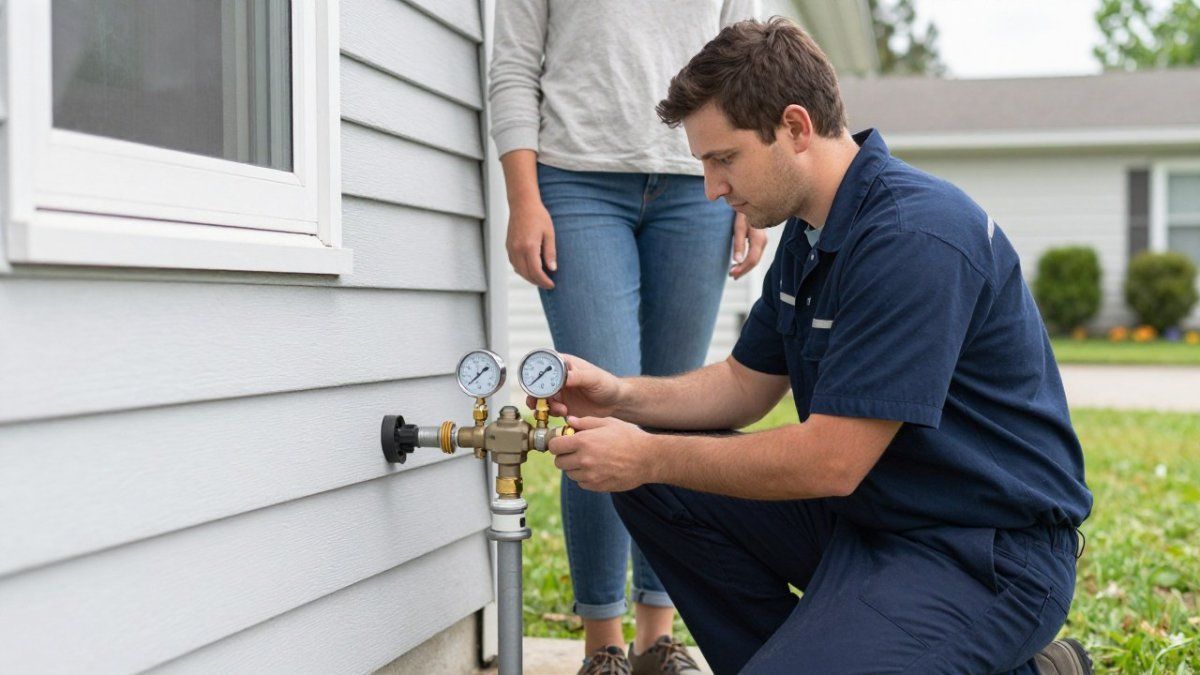
- Get the test report. Ask for a written copy that lists which part failed, the readings, and the tester's license or certification number. You will need this for your records and possibly for your water provider.
- Call a licensed backflow tester or plumber. Schedule a repair or retest as soon as you can. In many jurisdictions the tester who performed the failed test must file the report with the water authority, so confirm who is responsible for reporting. If you need help lining up a licensed professional quickly, our Handyman team can assist with the repair work.
- Keep records. Save the report and any repair receipts. If your provider audits compliance, these documents are your proof.
- Watch your water. Note any changes in color, taste, smell, or pressure, and report them. A failed mechanical test is not the same as confirmed contamination, but changes in water quality are worth flagging.
What Happens to Your Water Service After a Failure
In most cases, water service is not shut off immediately after a failed test. The device is still physically in line, and the provider typically gives the property owner a window to repair and retest. However, service conditions can change:
- Isolation of the assembly: If the device is leaking, damaged, or poses an apparent cross-connection risk, the provider may require the assembly to be isolated, meaning the shutoff valves on either side are closed, until repairs are complete. That can interrupt water to the affected line.
- Operating restrictions: Some providers allow continued use during the repair window but require the property owner to notify occupants and post signage if the assembly serves a commercial or multi-unit property.
- Escalation for missed deadlines: If the retest deadline passes without a passing result, providers can escalate, from warning letters to fines to termination of service in serious or repeat cases. The specific escalation path is set by the provider, not by a single national rule.
Watch out: Do not assume a failed test means your water is unsafe to drink. A failed mechanical test means the device did not pass its check; confirmed contamination is a separate determination made by the water provider, usually after additional sampling. If you have concerns about water quality, contact your provider before drawing conclusions.
How to Verify Local Requirements
Because rules vary by water provider, verify rather than assume. Look up your provider's cross-connection control or backflow prevention program page, or call the number on your water bill. Ask for the written policy on repair deadlines, retest reporting, and service interruption. Keep a copy with your test report.
The steps below summarise what to do after a failed test, in the order the article recommends.
| Step | What to do | Timing |
|---|---|---|
| Get the test report | Ask for a written copy with failed part and readings | Right away |
| Call a licensed tester or plumber | Schedule repair or retest | As soon as possible |
| Keep records | Save the report and repair receipts | Ongoing |
| Watch your water | Note changes in color, taste, smell, or pressure | Ongoing |
| Confirm deadlines and reporting rules | Ask your water provider three questions | Before repairs begin |
Backflow Preventer Repair: Repair, Clean, or Replace
Not every failed device needs a new one. The right choice depends on what the tester finds and on a few practical factors you can evaluate before you commit.
- Cleaning works when debris is the only problem. It is often the least expensive fix and is common on devices that sit on older lines where sediment accumulates.
- Repair works when a few worn parts, seals, discs, springs, or check valve components, are the cause. Replacement kits are often available for current models, so ask your tester about parts availability. For a deeper side-by-side look at repair versus replacement for your device, read the full comparison.
- Replacement makes sense when the body is cracked, badly corroded, obsolete, or when the device has failed repeatedly after repairs. If parts are no longer manufactured for your model, replacement is often the only compliant path.
Decision Criteria: Repair vs. Replace
Use these questions to guide the conversation with your tester:
- Age of the assembly: Devices have a service life, and older units are more likely to fail again soon after a repair. Ask the tester how many years the model typically lasts and where yours sits in that range.
- Parts availability: If the manufacturer still supports the model, repair is usually viable. If not, replacement avoids a second failure.
- Repeated failures: Repeated failures can point to a deeper problem, worn body, chronic debris, or pressure issues, that a parts swap may not solve.
- Labor versus parts: A repair that requires extensive labor on an aging device can approach the practical cost of replacement. Ask the tester to walk you through both paths.
- Total cost over time: Compare the repair cost plus the likelihood of another failure against the replacement cost plus a fresh service life. A licensed professional can give you a quote for each option. For current pricing, contact M Property Services for a quote.
How to Read the Test Report
The test report is not just a pass/fail stamp. It records the readings the tester took at each check point, and those readings tell you where the device failed.
- First check valve reading: Measures whether the upstream check holds against backpressure. A reading that drops or fails to hold points to a worn or debris-blocked first check.
- Second check valve reading: Measures the downstream check. A failure here often indicates a worn second check or a relief valve interaction.
- Relief valve opening point: On reduced-pressure principle assemblies, the relief valve should open within a specified range. A relief valve that opens too early or fails to reseat is a common failure point.
- Static versus flowing readings: The tester records pressure under different conditions. A device that holds static pressure but drops under flow can still fail.
Ask the tester to point to the specific reading that failed and the part it corresponds to. That single question turns a confusing report into a clear repair plan.
How Technicians Diagnose the Problem
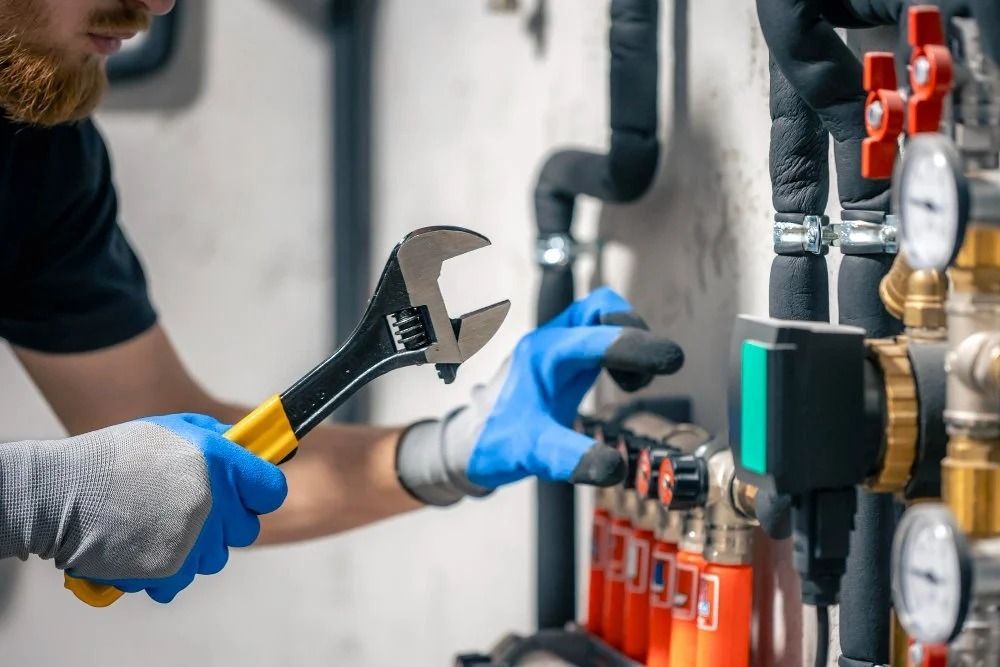
A technician usually follows a repeatable process. They first close the shutoff valves and open the test cocks to measure pressure on each side of the check valves.
Next, they inspect the parts. They look for debris, cracked discs, and corrosion. Many testers will show you the parts they pulled out, which makes the results easier to follow.
Finally, they retest the device after any work. This confirms the repair actually fixed the problem.
Getting a Second Opinion
If a failed result or a replacement recommendation does not sit right, you can verify it without accusing anyone of wrongdoing. Confirm the tester's license or certification through your state or local authority, ask for the specific readings that failed, and request a retest, ideally by a different licensed tester if you want an independent check. A legitimate tester will welcome the questions; a retest is a normal part of the process, not an insult.
Backflow Retest After Repair
Once repairs are done, the device needs a retest. For the full picture of the retest process, see our residential backflow testing guide. A licensed tester must check it again, and the new report goes to your water provider.
Keep the device on a regular schedule after it passes. To see who needs backflow testing each year and how often it applies to your property, check the details before your next due date.
Booking Your Retest With M Property Services
A failed test is stressful, and you should not have to figure out the next step alone. At M Property Services, our team handles backflow testing and repairs for homeowners in the Treasure Valley, and we can help you understand your test report and recommend next steps. Contact us to get started, and reach out with any questions about your device.
Frequently Asked Questions
What happens after a backflow preventer fails a test?
A failed result means the device is not stopping water from flowing backward into the supply, so it has to be repaired or replaced and retested. Your water provider or the tester usually sends the report to the water authority, which tracks compliance. Keep a copy of the failed report, because you will need it when you schedule repairs and when you submit the passing retest. Most failures are fixed without shutting off your home's water, but any repair that requires isolating the line may interrupt service briefly.
Will my water be shut off if my backflow test fails?
A failed test does not automatically shut off water to your home in most cases. However, if the failure is not corrected within the deadline set by your local water authority, the provider may restrict or suspend service. Check your notice for the compliance date. If the device is leaking heavily or the test shows a serious cross-connection risk, the water provider may act sooner. Contact your provider and a licensed tester promptly to avoid service interruption.
How do you fix a failed backflow test?
Fixing a failed backflow test usually starts with a licensed technician diagnosing the cause, such as a fouled check valve, a worn relief valve, or debris in the device. Many failures can be resolved by cleaning or rebuilding the internal parts. If the body is cracked or the parts are beyond repair, the assembly is replaced. Once repairs are complete, the device must be retested by a certified tester, and the passing report must be submitted to the water authority.
Does a backflow preventer need to be retested after repair?
Yes. Any backflow preventer that failed its test must be retested after it is repaired or replaced. The retest confirms that the corrected device holds the required pressure and closes properly. A repaired device that is not retested will remain out of compliance, even if it appears to work. Schedule the retest promptly after repairs so you can submit the passing report before your compliance deadline.