Emergency Electrical Repair Example: What to Do
October 6, 2026
A burning-plastic smell near an outlet is not a problem to put on tomorrow’s list. Neither is a breaker that trips every time the microwave starts, a sparking receptacle, or lights that suddenly dim across part of the house. This emergency electrical repair example shows how a small warning sign can become a serious safety issue, what a homeowner should do first, and where professional repair becomes necessary.
Electrical emergencies are stressful because the cause is often hidden behind a wall, inside a panel, or in equipment that appears normal from the outside. The safest response is calm, limited action: protect people, isolate power only if it can be done safely, and get qualified help.
An Emergency Electrical Repair Example in a Boise Home
A homeowner returns to a Boise rental property on a cold evening and finds that the kitchen lights are flickering. The tenant also reports that the dishwasher stopped mid-cycle and there is a warm, faintly burnt smell near the outlet behind the refrigerator.
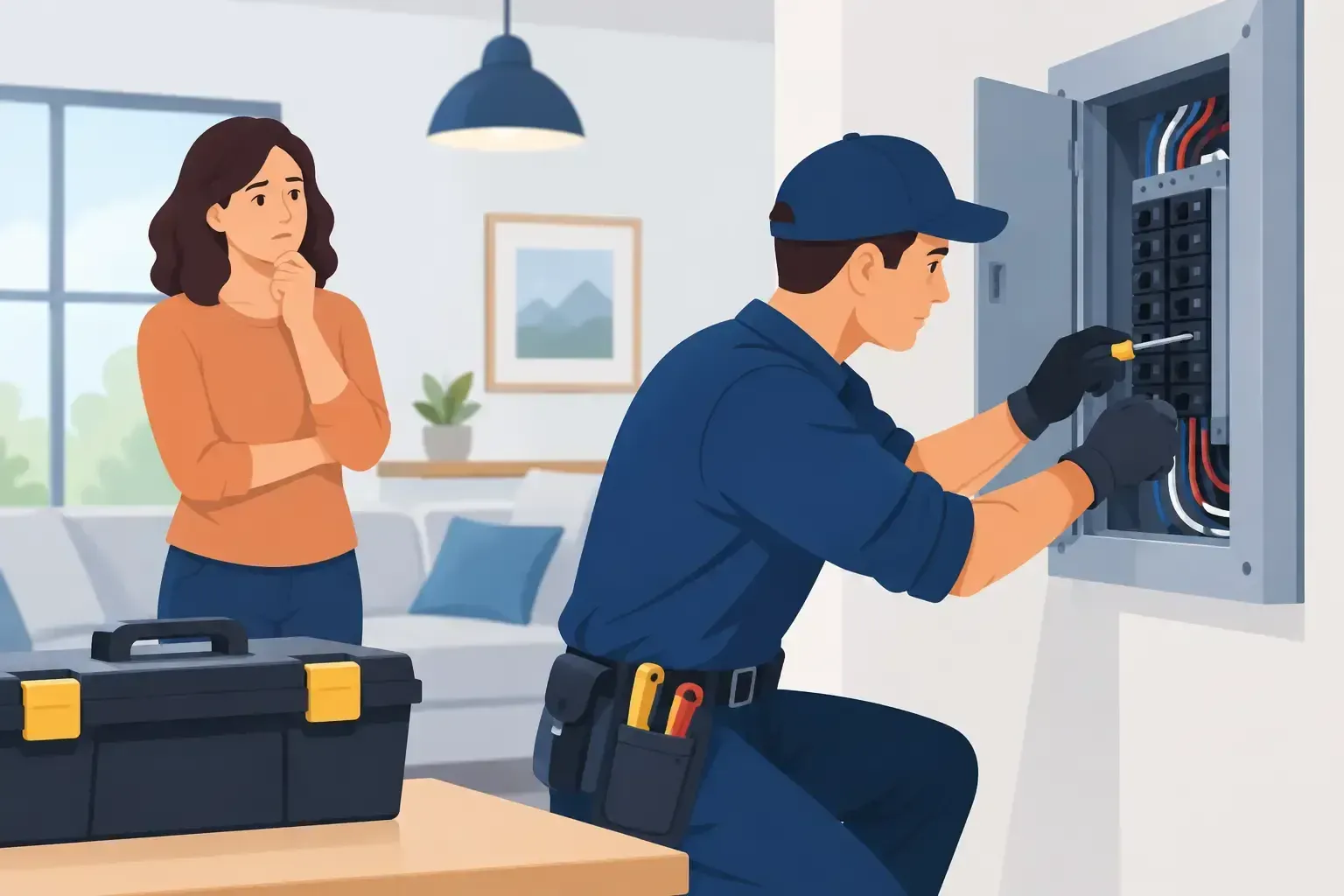
The homeowner first turns off the affected kitchen circuit at the electrical panel, but only after confirming there is no smoke, water near the panel, or active arcing. The refrigerator is moved to another safe circuit only if a properly rated outlet is available nearby - not through an extension cord. The homeowner then calls for electrical service rather than repeatedly resetting the breaker.
During the inspection, the electrician finds a loose connection in an overloaded receptacle box. Over time, resistance at that connection created heat. The wiring insulation had begun to discolor, and the receptacle itself was damaged. The repair involves replacing the failed receptacle and damaged wiring section, securing the connections correctly, checking the circuit load, and testing the circuit after the repair.
This is a useful emergency electrical repair example because the symptoms were easy to dismiss. Flickering lights can look like a bad bulb. A breaker trip can seem inconvenient rather than dangerous. But heat and a burning odor change the situation. They point to a possible fire risk and call for prompt professional evaluation.
What Makes an Electrical Problem an Emergency?
Not every electrical issue requires an after-hours response. A dead outlet in a guest room may be a repair that can wait, especially if there is no heat, odor, damage, or loss of essential service. A hot outlet, repeated breaker tripping, or exposed damaged wiring is different.
Treat the situation as urgent when you notice smoke, sparks, crackling, a burning smell, scorch marks, a buzzing panel, or an electrical shock. A circuit that will not stay on after one reset also deserves attention. Breakers are safety devices. If one trips repeatedly, it is responding to an overload, short circuit, ground fault, or equipment problem. Resetting it over and over can allow a dangerous condition to continue.
Loss of power may also be an emergency when it affects heat during freezing weather, a well pump, critical medical equipment, or safety systems. The right response depends on the cause. If the outage affects nearby homes or the utility equipment, contact the power utility. If the trouble is isolated to your home, panel, or wiring, contact a qualified electrical professional.
Call 911 immediately if there is an active fire, smoke, visible flames, a person has received a serious electrical shock, or a downed power line is involved. Stay clear of downed lines and anything they may be touching. Do not attempt to move a line, vehicle, branch, or fence near it.
What to Do Before Help Arrives
Your job is not to diagnose the wiring or make a permanent repair. It is to reduce risk without creating another one.
If it is safe to reach the electrical panel, turn off the breaker serving the affected area. If you do not know which breaker controls it, or if the panel feels hot, is making unusual noises, has water around it, or shows visible damage, leave it alone. Keep people away and wait for professional guidance.
Unplug appliances from the affected outlet only when there is no heat, smoke, or sparking. Do not touch a plugged-in appliance with wet hands, and never handle electrical equipment while standing in water. For an electrical fire, use a rated fire extinguisher if it is safe to do so. Never throw water on it.
It also helps to make a short record of what happened. Note the time, which appliances were running, whether the breaker tripped, and what you saw or smelled. Photos of visible damage can be useful, but only take them from a safe distance. These details help the technician narrow down the problem and can make the visit more efficient.
Repairs That Should Not Be DIY Work
Replacing a light bulb or resetting a single tripped GFCI outlet can be reasonable homeowner tasks when there is no sign of damage. Emergency electrical repairs are not the place to learn through trial and error.
Avoid opening an electrical panel, replacing breakers, cutting into walls to reach wiring, or replacing a burnt outlet without determining why it failed. A damaged receptacle can be the symptom of a loose connection upstream, an overloaded circuit, an incorrect wire connection, or deteriorated wiring elsewhere. Replacing the visible part alone may hide the real problem.
Extension cords are also not emergency wiring. They are temporary tools for light-duty use, not replacements for a failed circuit or a way to run a refrigerator, space heater, microwave, or other high-demand appliance. Overloaded cords and power strips can create a second hazard while you are trying to manage the first.
How a Qualified Electrician Approaches the Repair
A proper emergency visit begins with safety and diagnosis, not assumptions. The electrician will identify the affected circuit, inspect the panel and visible devices, test voltage and connections, and look for heat damage, improper loading, moisture, or failed components.
The repair may be simple, such as correcting a loose neutral connection or replacing a failed GFCI receptacle. It may also require replacing damaged wiring, separating high-demand appliances onto appropriate circuits, repairing a panel issue, or identifying a problem caused by aging equipment. The scope should follow the condition found, not a one-size-fits-all fix.
For homeowners and property managers, clear communication matters just as much as the repair itself. You should understand what failed, what made it unsafe, what work is recommended now, and whether any follow-up work is advisable. Licensed, insured, code-compliant work protects the property and helps prevent the same issue from returning.
Preventing the Next Electrical Emergency
Many electrical emergencies develop slowly. Pay attention to outlets that feel loose or warm, lights that flicker when large appliances run, switches that crackle, and breakers that trip more often than they used to. These are not normal signs of a home getting older.
Rental properties deserve particular attention because changing tenants, added appliances, and everyday wear can conceal developing problems. A quick check between tenancies can identify damaged outlets, missing cover plates, overloaded power strips, and signs of moisture near electrical devices. For owner-occupied homes, seasonal maintenance is a good time to look at garage outlets, exterior receptacles, bathroom GFCIs, and electrical connections near sprinkler or HVAC equipment.
M Property Services helps homeowners and property managers handle urgent property concerns with one accountable local team. When an electrical problem raises a safety concern, the right next step is not guesswork. Shut down what you safely can, keep people clear of the hazard, and arrange a qualified inspection so the repair addresses the cause rather than just the symptom.